Thursday, 3 July 2014

Blog Hop - My Writing Process - Want to take up the Baton?


I've been nominated to take part in a Blog Hop by the lovely author, Margaret James, and if you've not read her "Charton Minster Trilogy"
 you've truly missed out on gem reads: all three!


The Blog Hop is titled "My Writing Process...."

1. What am I working on?

 
Think Regency England, a romance, several murders and mystery.
I can tell you, "For Love of Captain Jack" has been a tough novel to write. Albeit this novel is one of several Georgian and Regency Romantic Murdery Mysteries, I think my previous post on here gives insight to where I was at, not so long ago, in writing matters, being that of the hair-pulling kind. Thankfully I'm now past the "maze" stage in which characters were leading me up and down blind alleys, and where red-herrings were cropping up all over the place in order for the villain to carry out his wicked deeds. I am... Wait for it ... YES!!!  On the home run of last chapter.


2. How does my work differ from others of its genre?


Ha, well... I'm not Baroness P.D. James, who ventured from her world of contemporary murder mysteries (crime novels) to the historical realms of the Regency era with her book and TV dramatisation of Death at Pemberley. Oh no, my chosen historical world fits glove-tight with my love and studies in history, and lifelong expertise in rolling equipage and equine pursuits. I do feel at one with my chosen historical periods, and I duly take risks with depicting life as it was and not by way of a rose-tinted perspective. I suppose I'm a bit of rebel at heart, and rather than parade prissy misses around the Assembly Rooms in Bath or the stench-laden streets of London, with either a chaperone or whingeing mama, my heroine's are more likely to "dare" in gracious manner within country settings and indulge the occasional jaunt into town.              


3. Why do I write what I write?


I recall my nanny once saying: "You were most definitely born several hundred years too late, my girl" and all because I likely had my head within a 17th century swashbuckling tome (Alexander Dumas), that of Jane Austen or Ann Radcliffe novels, and my secret reading was that of the salacious harlot "Angelique" - a series of novels by Sergeanne Golon (Serge and Anne Golon) a French husband/wife team. Hence historical novels have been my life-blood entertainment, though not to the exclusion of a darn good read in any genre, even gothic vampire novels.      


4. How does your writing process work?


PORTRAITS and DREAMS! In all honesty portraits are usually the catalyst to a novel, whereby the image is stored in the conscious mind - the what is she/he thinking, what made her/him smile that way, why are the eyes laughing? From such thoughts the subconscious leaps into play with overnight dreams, thus in cinematic glory characters step forth their story revealed. My task then becomes one of turning a movie into a book, by painting with words what I have seen.   

Passing on the Blog Hop Baton
 
 
I hope if you've read this you won't seriously think me as mad as a hatter, but you know what, there are the odd occasions when I feel akin to Alice (Wonderland) and that I've fallen through time into a bizarre world of make-believe...
 
And so, to the passing on of the Blog Hop baton... Whom shall I choose? To the bridge, to the bridge... Let Pooh Sticks decide who shall be the one/s... Damn it, there's only a trickle. OK, anyone up for the Blog Hop Baton? Here are the Rules below:

1. Answer the four questions above and post on your blog
2. Link back to the person who invited you (me)
3. Name the people who will be posting next. You can name one or two, it’s up to you.


All my books are listed in the left hand column with direct links to Amazon.
 
The post below reveals the cover of the novel mentioned in this Blog Hop!


Thursday, 29 May 2014

Trapped in a Maze - the joy of writing historical murder mysteries!

It seems like ages since I penned a post for this blog, but life and other commitments have chipped away at the days and the weeks, thus time has slipped past almost unnoticed. That's not to say I haven't been writing. I have, and murder mysteries are complicated stories in which red-herrings (fishy clues) lead readers along dark alleys, and over hill and dell not knowing when a chance sighting of the murderer will occur, if at all. 
 
Whilst working on the case this author has likewise ended up in a maze. Yep, the macabre murders in "For Love of Captain Jack" have led to the journal of a dead woman, but can it reveal sufficient about the murderer for Captain Jack to expose the beast and bring him to justice? Should justice be meted by sword, pistol or the hangman's noose?

More updates on this novel later...


Monday, 14 April 2014

Exposure or Assassination! (?) - Meet my Main Character/s


Fellow FB friend, Marilyn Watson, invited moi to partake in the fun of a blog/tag, which entails a questionnaire for a WIP (work in progress). The instigator of the on-going blog/tag is Debra Browne. I am posting this early as I'll not be around on the 16th April. 
So here goes, and being a rebel 'n' all I've plumped for a Series novel.


 Questionaire:

1) What is the name of your character? Is he/she fictional or a historic person?

Ans) Fictional characters are my preference, no messing. After all, fictional beings require creative godlike input from their stepping to the page all innocent and carefree, and of course, totally unaware that a momentous event is set to rock or shatter their lives. Thus I created the Royal Series. It spans the years of the English Civil Wars and beyond (1644 – 1689), in which the households of Axebury Hall and Loxton House take centre stage.

The main characters are Anna Lady Maitcliffe and Morton Viscount Axebury.

The Gantry and Thornton families respectively take up arms and fight for King and Country. Well, not all, and there comes the rub of individual thinking. All my novels have love and romance as a central theme and I don't shy away from explicit love scenes and or violence: the latter, though, in moderation. 


Axebury Hall.

Both families are bonded by far distant ancestral links dating back to a Knight Crusader. The key to the series is the friendship between two young men and a girl who are essentially torn apart by war and divided loyalties. The two families are thus ripped asunder from within as time and war march ever onward, and so the saga begins.

Loxton House
2) When and where is the story set?

Book 1 is set in Somerset involving ongoing tussles to secure - at the time - the second most important port in England (Bristol). Throughout the period of the English Civil Wars, opposing factions were treading and retreading across the hills and levels of Somerset and farther afield.


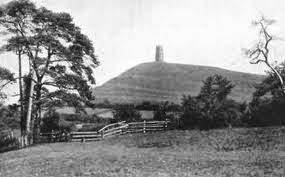
Glastonbury Tor
The George Hotel Glastonbury
Formerly known as The Pilgrims' Rest.
3) What should we know about him/her?


The hero Morton Viscount Axebury refuses a captaincy in a Cavalier Regiment of Horse, and instead rebels by taking up the cause of Parliament. Morton’s motivation bears no religious bent but he is a young man of noted moral beliefs. He despises the profligacy of the royal court at the expense of the people, who  are forced to pay higher taxes and increased tythes. As time passes life inevitably teaches him that change is not always as one had hoped for.


4) What is the main conflict? What messes up his/her life?


Banished from Axebury Estate and as good as disinherited, Morton suffers the loss of Anna, whom he adores. Prior sworn to uphold her status as that of his father’s young ward he has always treated her akin to that of a sister. When she later becomes betrothed to his father, life as a soldier serves merely to kill the pain of losing the love of his life, and hell is waiting around every corner when he dares to step back onto Axebury land as a Parliamentarian Captain of Horse.
Equally, for Anna, life is bitter sweet when she is sure her heart’s desire has perished. Untimely deaths, though, can tear a heart in two. Thus the path ahead is fraught not only with danger but emotional turmoil. Anna, having already suffered the loss of her parents, she would not wish such pain on others. Nothing though, has prepared her for living with the enemy: a man she loves but cannot forgive.  


5) What is the personal goal of the character?

For the hero: the abolition of the divine rite of King Charles I to rule without accountability to Parliament, the very King who defies and denies Parliamentary democracy as the elected voice of the people.

For the heroine: she dreams of peace not war, love not hate, but she’s young, self-centred, and despairs of men who war and fight and achieve nothing but carnage, pillage and plunder. And yet, love and hate are strong bedfellows in the emotional stakes and while war takes it tally in death, Anna learns that selfless love comes at a price she must pay for past mistakes. I will add there is a happy ending for Anna and Morton, though not without pain and heartache. But, with the death of a king and his son in exile, how long before Charles II will challenge the right of Cromwell to rule over England?


6) Is there a working title for this novel, and can we read more about it?

By Loyalty Divided


7) When can we expect the book to be published?

The book is already published in Paperback and Kindle version.
Book 2 and book 3 are also published.

The blurb:
A 17th century story of Undying Love and Scandalous Seduction. All set against the backdrop of the English Civil Wars 1642 -1649. Co-starring Charles Prince of Wales (Charles II) and Prince Rupert.
Orphaned at royal court, Anna Lady Maitcliffe has embraced freedom from courtly restraint whilst residing at Axebury Hall Estate. Wilful and impulsive she wins hearts with ease, but Viscount Axebury duly rejects her romantic overtures, not once but twice and for good reason. Civil War is marching across England and he will soon be regarded as the enemy.
Distraught by his rejection she turns to another for solace, an older suitor whom she trusts above all others. Seduced by her feminine wiles, Lord Gantry's overt desire to possess her soon gives rise to new meaning of amour. Nonetheless she is trapped in a loveless betrothal. Fate suddenly intervenes and throws her and the viscount together, but hell lies before them and claims terrible dues in payment for their undying love for each other.


~

Excerpt:


Anna had set out from Axebury Hall at dawn, and it was now late into evening. With one stop for food and wine at a small alehouse at around midday, darkness had now descended and the lights of Glastonbury town seeming ever distant. The only sound on the still night air was that of horse’ irons on stone and jingle of curb chains on mouthpieces and clanging of swords in steel scabbards. It felt strange yet reassuring to have a military escort consisting one rider to the fore leading the way, one alongside and two guarding against attack from the rear.
   In Thomas Thornton’s letter he had warned of scoundrels and vagabonds along the highways and byways, and had made mention of lone riders robbed recently in daylight and others attacked by night on the Glastonbury Way. Her safe conduct under military escort was, and at present still his to command, and she is willingly riding in company with Roundhead soldiers: Thomas their senior officer.
   She had never thought Thomas would agree to Morton’s plan of saving him from the fate of a dungeon or worse, and although at first reluctant in extreme he had finally caved and sworn allegiance to the Army of Parliament. In some respects it was all rather sad. For he was obliged to strip his Royalist attire from his body and cast all to a fire: every semblance of his former life a bed of ashes.
   But if not for Thomas she might have remained ignorant of Morton’s fate, and all she could do was pray he had not perished in the time Joseph and the troop had taken to reach Axebury Hall. Having always feared bad news, the sickness befallen Morton she thought cruel and unjust, because he was a good, honest and honourable man. It might already be too late, but she hoped not. She truly desired to make amends, and to exact forgiveness from him for all the hurt and scorn she had cast his way. Was it selfish of her to seek clemency?


 Amazon UK       Amazon US


A Prequel to the Royal Series  


Toast of Clifton - Book 2


Royal Secrets Book 3


To come in the Royal Series:

Love & Rebellion book 4


&

Lady of the Tower book 5

~


Thanks for stopping by. Please visit five authors who will follow me with posts about their main characters (tomorrow) on the 17th April.

My fellow tagees are all authors of 17th century novels: a truly swashbuckling era.


Saturday, 18 January 2014

Latest Release - Romantic Regency Murder Mystery


The Reluctant Duchess is a Regency tale of romance, abduction, mystery and murder. The setting is Exmoor in Somerset, a place made famous by the novel Lorna Doone, of which the local inhabitants refer to as Doone Country.
 
Devon Howard, the Duke of Malchester, acquires a bride by dubious means. Well aware Liliana is a reluctant duchess, and although his new wife submits to his ardent advances on the wedding night, he cannot be sure, that even if given time, she will ever surrender her heart to him. While his past continues to damn him, he sets out to win Liliana by inciting jealousy and rivalry ‘twixt her and Serenity: a would-be mistress?

Likewise Liliana has a dilemma, for although she despises her circumstances and feigns disinterest in Devon, she cannot deny his desirability. Twice married, rumours abound. Devon has twice bedded and broken a wife. Liliana believes otherwise. Nonetheless, evil does exist within the walls of Calder Hall, and Liliana fears for her life when she’s brutally abducted from her coach whilst en route from Dorset to Exmoor. But it is Devon’s blood that is sought, and while revenge for one person proves bittersweet, for another it proves fatal.
 
Excerpt: The duke's thoughts and discourse with his friend, an earl, whilst travelling in the duke's coach.
 
    Damn it to hell, from the moment of first setting eyes on Liliana, desire had embraced him as it never had before. Youthful romantic ideals had fallen pale against the gut-twisting moment of their second encounter. Perhaps his personal experience of grasping manipulative women had turned him from carefree youth to cynical lusty libertine, but on that day, that memorable day of having signed a promissory note to her father to rid her papa of debt, Lilana had unexpectedly rushed into the room declaring ‘Papa, I shall not wed a man I neither know, nor love’.    Dear God, how his pulse had raced, his heart near stalled, and with one fleeting glance of the situation before her, horror befell her. Her violet eyes turned mutinous, her kissable lips hardened, she tossed her golden head much like a yearling filly resisting the bit, and her voice tinged with ice sliced the air. ‘You can marry me to this libertine, but I shall not succumb to him of my own free will’. Those very words, ‘shall not succumb’ had tainted the marital proceedings, had set him ill at ease and thus he had sought solace and courage from liquor prior to entering her bedchamber. And now, an evening of bliss, and a night of delight in his wake he was feeling reborn.
    Marcus drew him from reverie, with a chuckle: “Well dear fellow, ‘twould seem your smug expression doth declare the duchess finally rolled over and laid her prickles to one side.”
    “Happen she did.”
    “Oh come now, Devon, the spring in your step is that of a happy rutting swain: if ever I did see one. Serenity is sore vexed at your betrayal.”
    “How dare she, how dare she raise betrayal as a weapon to beat my hide behind my back? Long before she became my mistress, though mistress being a loose term in respect of the fact we have never shared a bed. At the outset of any woman seeking favour from my purse, I have at all times made it abundantly clear I am a selfish individual, my own desires uppermost. And yet, women have rallied to my needs, have performed fellatio in the strangest of places, daringly at times, and all no doubt in the belief they could win my heart: eventually.”
    Marcus shrugged. “Women set out to change us, it is an inherent weakness in their makeup, and in rare cases they succeed. But, for the most part, we choose to let the ladies think they have conquered all whilst we covertly carry on with amours aplenty. Though, I confess, as a carefree singleton, I am exempt from the scurrilous business of infidelity within marriage.”
    “True enough, and when husband’s are caught delving beneath another woman’s skirts, those same men endure a home existence of purgatory involving narrow-eyed disdain, sharp tongued slights, slamming doors, cold beds and what amounts to unhealthy households where children despair their parents sanity.”
    “By God, Devon, you’re not seriously looking to become a righteous family man, are you?”
    Devon thrust a booted foot to the seat opposite; nudging Marcus elbow. “What is there, that betters the delights of a warm bed and a responsive wife?”
    Marcus expressed incredulity as a second boot landed on the seat beside him. “You cannot mean you are. . . By God, you really do have every intention of casting Serenity aside and taking yourself off to the marital bed.” Marcus shook his head, sense of despair about him. “And what is to become of us, the merry libertine troupe? We shall not survive without you, you know. You lead and we follow.”
    Silence hung heavy, each staring the other down, until Marcus averted his eyes out through the carriage window and mumbled, whether to himself or Devon, it mattered not. Devon closed his eyes, and said, “Wake me when we arrive at our destination.”


Friday, 27 September 2013

Now on Release! - The Dark Marquis


Blurb:

Despite a dark secret and aware his father the duke will likely disinherit him for marrying below his rank, Rupert Marquis of Ranchester is nonetheless determined to wed his mistress. But Caroline Lady Somerville, an old flame of Rupert’s has returned from India a widow, and has every intention of once again leading him into vices of the flesh, gambling and the dream smoke.

Nervous but happy about imminent wedlock life becomes Hell for Estelle, when one man’s inner desires lead to blackmail, betrayal leads to revenge, and a string of murders place the duke in the frame as the killer. But what possible reason could the Duke of Leighdon have for terrorising Estelle, for killing the duchess, a portraitist, a whore and Caroline?

Amazon


This is my first review gratis Suzy at Romance Reviews Magazine.

The Dark Marquis – Regency Romance & Murder Mystery Series
A well-written intelligent Regency Romance. It was a refreshing change to read a romance where the opening scene is missing the ubiquitous angst driven heroine bleating and berating the hero. Ms Howarth instead focuses reader attention with a duel at dawn and a chilling outcome. The hero survives his injury as he must for the story to continue. The death of his opponent however is totally unexpected. The action-packed start sets the pace for further macabre deaths leading to
a deeply disturbing murder mystery with several of the leading characters as the prime suspects. All have committed vile deeds in the past. Heartfelt defence put forth failed to exonerate their actions. Although the heroine [Estelle] has a feisty nature she’s loveable and vulnerable as all women were to the rules and regulations of Regency society. Mistresses within the haute ton conducted themselves in discreet manner. Mistresses from the lower order of the ton crossed the divide at their peril. Estelle has no title. Lady Caroline does. One is a lady, the other not. They both want the same man. I really did like the Marquis of Rantchester. His love for Estelle touches the heart in so many ways and I forgave him his one misdemeanour while in company with Caroline as does Estelle. He redeems himself with true heroic gallantry and the seductive Lady Caroline meets with a suitable humbling end. Without a shadow of doubt I rate this Regency Murder mystery a five star read all the way from beginning to end. The characters are strong. The plot is tightly woven. The murders are cleverly linked leading to a surprise villain. The romance is enduring. The voice of the narrative is unique
in portrayal of Regency England 1819.

Wednesday, 28 August 2013

Lucy Walter - mistress or wife of Charles II?


Would you like to know a little more about Lucy Walter, Charles II's mistress or wife?
 
With the help of Lord George Scott (new evidence) I endeavour to redeem Lucy's reputation from that of King's whore to a devoted mother who was sorely abused by ambitious courtiers hell-bent on ridding her son from any chance of becoming his legitimate son. Why did James II continue to set vile calumnies against the Duke of Monmouth's mother long after her death, something James' followers upheld in chronicles and furthermore, authors of historical novels have continued to follow the same calumnious route to her detriment. I tell Lucy's story through the eyes of the hero and heroine of TOC.
 
This steamy romance is set against the backdrop of Charles Stuart’s attempt to wrest England from Oliver Cromwell’s clutches (1651), and that of the royal court in exile.
 
Once renowned as the Toast of Clifton, Elizabeth Mountjoy strives to shake off rumours she was ever mistress to Charles II, for she’s madly in love with Captain Thomas Thornton: a Parliamentarian Captain of Horse. Unfortunately, past betrayal haunts Thomas, and when the chance to right a wrong comes his way he once again fights for the King. But to lose his estate lands is a high price to pay for heroism in defeat. Worse, the love of his life suffers the wrath of one of Cromwell’s officers, and Thomas is finally forced to decide who must come first whilst in exile, wife or King? He’s not alone in facing a dilemma, for the King too is forced to put his country first before his heart as the court intrigues in exile take precedence.
 
 
Amazon

Friday, 12 July 2013

Latest Release - Royal Secrets!


Just out on release! 
Book 3 in The Royal Series.
A 17th century romance involving forbidden passion, lust, betrayal, abduction and all set within Restoration England and the royal court of Charles II.

It's 1669, and Justine Thornton's heart is lost to that of Richard Viscount Axebury. Although wise and malicious counsel from family and friends warn of his reputation as a courtly rake, a chance encounter with James Scott Duke of Monmouth causes her heart to waver and suddenly her life seems infinitely charmed. But family indiscretion at the court of Charles II turns Justine's life from one of carefree bliss to that of surviving rogue intrigues and political ambitions.

As old and new feuds take precedence at court Justine becomes party to information that cannot be allowed to reach the King's ears, for not only does she pose a threat to one of the King's mistresses, the King’s brother too will be called to account for his actions. Upon Justine’s sudden abduction the heroic camaraderie of Viscount Axebury and the Duke of Monmouth pose an even greater threat to her kidnapper, and her father the Earl of Loxton is soon face to face with an old adversary. But who will prove to be Justine’s champion, the viscount or the duke, and can the king’s mistress be toppled from her elevated position?


Sample kindle at Amazon: Amazon .co.uk  Amazon .com

Will post up sample chapter on here over the weekend.

Tuesday, 14 May 2013

The Greatest Historical Love Story Ever - or is it?


Gone with the Wind: is it the greatest fictional love story ever written?


Clark Gable & Vivienne Leigh: the movie image.


Published in 1936, it became an immediate bestseller, and Margaret Mitchell received critical and popular attention. In 1937 it won the Pulitzer Prize, and then quickly adapted to a movie in 1939, which won ten Academy Awards. It was categorized as “A Historical Romance”.

And, we all know it was set in northern Georgia during the drama of the American Civil War and the Reconstruction years. The prime characters were Scarlett O'Hara, Rhett Butler (above image), Ashley and Melanie Wilkes. The novel itself addressed romantic love, unrequited love, jealousy, obsession plus survival and destitution post wealthy lifestyle. It covered the social structuring of gender and class during that period of history: timeline American Civil War 1861 – 1865 = 4yrs and reconstruction years, though the latter left vague in the movie.


--------------------

Now let’s compare fictional romance with a real-life Historical Romance.

The great love affair between Horatio Lord Nelson, Admiral of the Fleet and Emma Lady Hamilton:


Emma Hamilton had remained faithful to Sir William Hamilton since becoming his mistress in 1787 and his wife in 1791 - William being considerably older than Emma. Nelson too, had been loyal to his wife as defined of good husband, but had indulged with courtesans. Neither marriage had given Emma or Horatio the fulfilment of love and romance they’d craved, and both had fallen out of love with respective partners.

When Nelson and Emma met for the first time, besotted best expresses the intensity of feelings between them, but it was a hopeless situation. They were both married and he was due to sail to war. 

The second time they met, in Italy, the love they felt for one another could not be denied, and during the flight from Naples and the struggle against the French they fell profoundly in love, and by May 1800, Emma was pregnant with Nelson’s child. There is of course, much more to their story, inclusive a long overland trip from Naples to England accompanied by her husband. Once they were back in England, Nelson moved in with the Hamiltons for a while, but turn of events such as befell them, he later arranged rent of a house and set up home with Emma. His wife refused to give him a divorce. Again there is too much to tell in one simple blog post.

Needless to say, when Nelson was killed at the Battle of Trafalgar news reached Emma and she was devastated, but worse was to come. She lost every thing because although Nelson had made provision for Emma and his offspring whilst at sea he had failed to name her as a beneficiary in his will. His wife laid claim to all his estate despite no children of her own. Emma ended up destitute and it is said she died a pauper-cum-prostitute: no proof as such.. 

Nelson and Emma’s love affair lasted 6 yrs. It was an intense, emotional romance that swept them away on a tide of genuine love that knew no bounds yet ended in terrible tragedy: for both.


Funnily enough, Emma & Nelson are featured in my novel: Venetian Encounter: the first half of the story set in Naples!

------------------

Napolean and Josephine: Another great love affair, or was it?


The story of Napoleon Bonaparte and Josephine de Beauharnais is supposedly the most passionate and stormy love affair in history.

When Josephine's husband was executed at the guillotine during the Terror in Paris in 1794. She refused to mourn his death and soon became mistress to several prominent politicians of the time. In 1795 Josephine had a brief affair with Napoleon. He was 6 years younger than her, and she didn’t even like him. It was nonetheless a politically motivated affair conducted by third parties. Napolean, though, proved utter smitten much to her annoyance and pursued her with intent to make her his wife. She did eventually marry him in March of the following year after an intense an all-consuming love affair for his part, whilst she indulged lovers besides. In 1810, after years of failing to produce an heir for him they both agreed to divorce.

A happy and sad affair is this love story and poor old Boney (Napolean) besotted, whilst Josephine was swayed by power of favour and greed. 


---------------------

War And Peace: again a fictional story, but is it a mere Historical Romance? 
No, for it does not have a single hero and heroine, it has several of each. Yet the Hollywood movie “War And Peace” supposedly based on the novel by Tolstoy, depicts one heroine, one hero, and sort of anti hero.


Movie image.

With Napoleon's forces controlling much of Europe. Russia is one of the few remaining countries unconquered by Napoleon. So it is a Russian epic story of war and the Rostov family, the Bezukhov family, and that of Prince Andrei Bolkonsky’s family. 

The principal characters consist of soldiers: Nicholas Rostov, Prince Andrei Bolkonsky, Pierre Bezukhov, a self-styled intellectual [knows what's right but still does wrong] and is not interested in fighting. Pierre's life is irrevocably changed when his father dies, leaving him a vast inheritance. Although attracted to Natasha Rostov, (Nicholas' sister) Pierre gives in to baser desires and marries the shallow, materialistic Princess Helene. When Pierre discovers his wife's true nature the marriage is ended. 

Meantime Prince Andrei is captured and later released by the French, and returns home only to watch his wife die in childbirth. During a visit to the country months later, Pierre and Prince Andrei meet again: cue old friendships/hate/jealousy/desires etc. Prince Andrei sees Natasha and falls in love, and the course of true love gets tough, plus this is one hell of an epic and it would take blog after blog post to write a full synopsis. So go buy the book and read the damn thing this time, don’t rely on the Hollywood version, which is just one snippet of love snatched from what is a multiple story of lovers, their lives and their families. Suffice to say there is death, heartache, misery, loves (plural) and both happy and sad ending. 

Which of the above is the greatest love story ever told beside that of Shakespeare’s Romeo & Juliet? Bear in mind all were written more than fifty-years ago. 


--------------------------------------


For me, the greatest literary romances are Gone With the Wind - War & Peace - Lorna Doone and Frenchman's Creek.  These novels are strong on emotions and the greatest conflicts of all, unrequited love or intense dangerous love affairs!  I loved Carver Doone (wicked anti-hero) in Lorna Doone, but I'm drawn to bad boys. Captain Jean Benoit Aubin - Frenchman's Creek: again a bad boy. But, I'm also happy indulging Jane Austen's gentleman heroes, and dark entities with Bronte novels.
How about you?

Thursday, 11 April 2013

My Contribution - Historical Book Fair


Welcome to Regency England. I’m Edwin Brockenbury, and it seems I am your host for the moment. Where Francine has scuttled off to I know not, so let me begin by telling you a little about my childhood home, the place you have now entered at your peril.


Beyond dutiful attendance at family gatherings or when I am summoned back to the family fold to appraise legal documentation on behalf of pater, my life remains relatively detached from Monkton Abbeyfields. I grieve not in absence from its dark and forbidding walls, and well remember how my elder brothers and I were left to indulge whatever youthful vices we chose to wile away our time.
   
James the eldest finally chose soldiering before the mantle of lord and master of the Brockenbury Estate would fall to his shoulders. Adam chose hedonism, and I chose books and learning. Then at age ten and eight I astounded my father by announcing I had a serious inclination to carve a career out of law and the courts of justice. Such news immediately drew momentary resistance from father, for he had thought I would follow the family tradition of a third son duly dispatched to ecclesiastical cloisters for enlightenment and knowledge all things Heavenly pastoral delights, but not I. Such was my determination to fulfil my dreams I rebelled in no uncertain terms and rode away from the house one dark night and found lodgings in London.

My present sojourn to Monkton Abbeyfields is entirely due to my literary creator who sought to intervene and set me on a homeward path. Though I readily confess I am most grateful on this occasion, for a pleasant encounter along the way has left me reeling in thoughts of what-if. Nonetheless, I suspect I have already slipped from Georgette Lady Beaumont’s mind, albeit we indulged a fleeting engagement of the flirtatious variety en route from London to Bath.
   

Having now retreated to my younger brother’s chambers, a portrait of a beautiful young woman thus stands before me. Ranulph’s artistic abilities are no mystery to me, for a distant memory steals forth and I see my mother young and beautiful and full of life; a child asleep on a chaise before her. But of course, she is sketching a charcoal portrait of her slumbering crippled infant: the one so heartlessly abandoned by our father. To mother's chagrin Ranulph was banned from the rest of the house and confined to his chambers and to the care of specially selected servants.
   
Dear God, how precious the memory of mother has become to me. Her death albeit far from a mystery the perpetrator of her fatal fall has forever escaped justice due to lack of proof of a child’s guilt in wishing his mother dead. Like father like son, Adam treats Ranulph no better than a dog to be kicked and bullied with a stick. And James, my eldest brother dead by his own hand some two years past, I still cannot believe there was ever reason enough for the taking of his own life.
   
Over the years little at Monkton Abbyfields changed for young Ranulph, though against all odds he determined he would learn to walk. Albeit with great difficulty and much pain suffered in the learning he mastered that which we take for granted, and today he still harbours dreams of a romantic nature, but little does he know that a murder committed this very night will provide the wherewithal for that dream to become reality.
   
Adam is, from that death forward, now lord and master of the Brockenbury Estate, though a rude awakening awaits on the reading of father’s will. Sadly, I have never felt anything for Adam, neither love nor friendship, yet he plagues my mind as though clues to all the deaths that have occurred here at Monkton Abbeyfields are emblazoned on his brow. Alas, I cannot read what is written. And Cousin Eliza, my father’s ward, is a Dark Miss if ever such could be tagged to her collar, and the damnably unpleasant madam already despises Georgette Lady Beaumont. Worse, Adam has long since coveted Georgette as he once coveted Monkton Abbeyfields.
   
What lies ahead I know not, but gut instinct tells me danger is lurking in dark corners and will strike not only at Ranulph and I, but at Georgette as well, more especially should my feelings for her become common knowledge. How am I then to unravel mysterious deaths from the past, solve the reason for my father’s untimely death and keep safe those whom my heart abides with? I fear a murder most foul is yet to be committed and perhaps more than one man must die if truths are to remain shrouded beneath lies.

Although duty to family has been part of life, I fear dreadful happenings have passed me by. Therefore I must cast selfish indulgence aside, and duty to loved ones must again take precedence.  


~
Edwin Brockenbury is the hero within the Regency Murder Mystery:
“Infamous Rival”

 ~
Book blurb:


Once the darling of the beau monde, Georgette Lady Beaumont’s reputation lies in tatters after the apparent suicide of Lord Brockenbury’s heir. Shunned by society she embraces a secretive lifestyle in which she endeavours to evade Adam Brockenbury, whom she loathes as much as he desires her. Believing him capable of murder to gain his heart’s desire, she is not alone in thinking his elder brother’s death as somewhat suspicious, and whilst on a clandestine visit to her dearest friends she encounters a stranger of note.

Her travelling companion, although of charming disposition and of considerable handsomeness, something about him errs dark and secretive but unmitigated mutual attraction exists that neither can deny. Unfortunately he’s a Brockebury too, and as love, jealousy and hate take precedence, three murders are committed and Georgette quite believes she will be the murderer’s next victim, but who is the real murderer?


Should you wish to read more inclusive images of places featured within Infamous Rival, the  opening chapter is here.


Author note:
I make no apology for writing historical romances, for love and lust can drive both men and women to fits of jealous rage and to the committing of crimes of passion.    

Home

Tuesday, 2 April 2013

“Romantic Fiction Versus Historical Fiction.”


Stepping back in time is a relatively easy thing to achieve for a novelist, is it not? After all, we need only select a chosen period, preferably an era in which something dramatic occurred, and Lo and Behold we have a ready-made plot, or do we?
   Let us now pause for breath. Who or what shall we write about?


What about this flamboyant warrior prince?
Handsome devil, ain't he, and how much do you really know about him, or think you do?


   But of course, (metaphorically speaking) as historical writers we’re setting off along corridors where candles or flaming torches light our path (cough). The winds of time all the while whisper through loose windows and howl from the dark labyrinths our ancestors knew so well. We may even start and falter in step at hearing a worn latch rasping metal-to-metal in gentle lamentation for the passing of the ages, for that is how we immerse ourselves in the chronicled atmosphere of history. And onward we tread in hunger and thirst for historical intrigue, political shenanigans, royal murder mysteries, and a fair bit of mayhem and a touch of romance along the way.
   We may happen upon a battle or become involved in a minor skirmish. We will no doubt pay witness to abhorrent acts of brutality and sexual violence. But all this is happening in the past, and if we adhere to 21st century thinking on morality we’d best not venture back in time.
   Now let’s imagine resting a tome of historical fact on one’s knee and a sudden gasp escapes into the silence of the ether: Gosh, did he really do that? Oh lordy, but that missive I put aside declares otherwise. Oh crikey.
   More tomes and pigeon-holed parchments must yet be browsed and what a daunting prospect, whilst copious notes already penned add to the accumulation of bewildering information. But, even well documented historical events may differ between penned personal accounts to that of state, court or ecclesiastical papers. When omissions occur and details of an event are vague or at odds in conclusion and, from differing sources, detective work is necessary in order to adhere to fact rather than fiction.
   Hmmm. So how do we set about filtering assumptions that might have paid court to individual chroniclers’ imaginations when they themselves penned accounts of events that occurred before their own lifetimes, or were influenced by allegiance to others? The inevitability of envy, revenge and all manner of political and courtly power struggles manifest often as calumnies set against rival factions. Worse, how much imagination is now going to play a part in how our chosen persons of note are going retell their story?

   Did I hear a titter from the back of the room expressing thoughts in the vein of, “but it is us the author who will retell the story!”

  Well let me tell you, there are different ways of conveying stories.
   
Straight Historical Biographies are prime examples of the much talked about tell-don’t-show style of writing = the detached narrative style, which reads more akin to a factual reference book. Rarely are authors of these kinds of novel able to impart any sense of the notable person’s personality beyond that of “this is how s/he was, this is what happened”. Hence this particular narrative style best suits straight telling biographies of historical celebrities. We get the basics, we get some finer detail, and we know when that person lived and what they did: presupposing we didn’t know all this beforehand. What else have we gained from this book? We’ve gained the author’s perspective on whomever/whatever the subject matter is. So, all in all it’s pretty damn easy to determine what is purely a straight historical biography, right? NO, is the answer, because Historical Biographies of late have become Pseudo Historical Biographies, which reflect more than mere author perspective on a time past, persons and events unfolding.

In Pseudo Historical Biographies an author will step beyond the detached narrative and in part become the historical celebrity and often as not adopt their own perceived mindset of their chosen subject matter: plus that of other key players. Once the mantle is donned the author then conveys thoughts, words, and actions, which in turn hopefully will bring the characters to life. We get to know their innermost thoughts, (or do we?), we feel their anger, joy, love, and we experience their anguish, their fears, and all the physical aspects of brutality and sexual depravity they may witness or experience for self.
   

The author’s aim within a Psuedo Historical Biography is to transport a reader back in time where senses are set alight and minds left reeling in the atmosphere of the author’s creation. Creation being the optimum word, for the author can only surmise what a person thought, felt and said, except in rare cases of documented quotes. And here the The Thin Line Wavers on the very edge of Fiction and Non-Fiction, and from The Thin Line Historical Romance & Historical Fiction banners stream and billow in the breeze because these two are the middle ground historical novels, the more popular sub genres of the historical fleet of books that inevitably sail on to the bookstands.


Who is this young woman? Does it matter that she became a fictitious character in one of my books and, that she met Prince Rupert, and when a child cavorted around the royal court with the Prince of Wales who later became Charles II. 


Authors of Historical Romance & Historical Fiction tend toward creation of worlds within worlds, where fictitious characters are creations of the author’s imagination. The characters might mingle with historical persons of note and pass the time of the day with them, dine with them and perhaps fight alongside them. Whatever happens, these individual stories although set within a noteworthy historical period, event or periphery of some great turning point in history, the true events are adhered to by sensible authors. Readers will either love the characters or hate them. In these kinds of novels a balance of narrative, dialogue and action are vital, because readers want to be thrilled, given to sighs in a romantic moment and left in awe as the book reaches its finale. What are your thoughts on the The Thin Line?

What do I write? In the historical genre I pen historical romances and historical series novels in which persons of historical note have walk-on parts. If you don’t like steamy and risqué sex, nor soldiers of fortune and strong heroines then my novels are not for you…

So where does your story telling fit in the historical genre?