Monday, 12 June 2017

Is Writing Author Notes Necessary for Historical Romance Fiction?


Paperback                          E-book


Is the writing of author notes necessary for historical fiction, more especially romance fiction? The straight answer is, yes, if characters lives are set against specific historical events and real persons of note. It's far too easy to say, but it's only fictional romance when in fact as soon as a real-time great battle is featured, a political storm, or a king loses his head, the novel is no longer mere fiction it has crossed the line into a recorded historical moment in time. Therefore the author is obliged to enlighten with at least a summary of events prior to and post the featured event/s, There will of course be readers who are cognisant to that period in history whilst many readers will be far from knowledgeable of your chosen subject matter, and likewise many readers have idealistic impressions of times past garnered from historical fiction novels. 

Sometimes short author notes suffice. At other times the story requires no enlightenment, the obvious is there, but on occasion there are times when long notes seem wise. I really did ponder the following notes for the above book, and then I remembered an American reader having said in a discussion that she knew little about the period of the ECWs, and although she had read one of the other books in The Royal Series, and albeit regional in content, as much as the entertainment and romantic value of the story she also valued the learning aspect, the desire to read more ECWs novels. A coup? Damn it yes, because I'd got her interested in a period she had never read before. And but a week past I received a lovely email from another reader who had indeed purchased the above novel (English male) and he was so impressed by the story and my author notes he purchased and read all the presently published Royal Series novels and awaits the next in the series with enthusiasm. This was from a man who wouldn't ordinarily have read a romance novel quote: ...never judge a book by its cover is the saying and as war novels go it was excellent and on a par with Bernard Cornwell with added spice worth reading. Not a word was skipped Ms Howarth, not a single word. You have yourself a convert and one who will look more closely at novels with romance headers... He went on and praised the author notes, so I thought I would post them here, for it's so hard to write author notes that don't sound too damnably tutorial in tone...                

There is no disputing the fact the 17th century – for the United Kingdoms’ of Scotland, England, and the Principality of Wales, and the former Commonwealth Protectorates – paid witness to a bloody period in history. There are many theories as to why the first Civil War (1642) erupted and all have merit in their own right of reasoned analysis. Unfortunately, few historians venture to the greatest impact on the populous such as that of the legacy bestowed by James I to his people. At a time when Bishops, priests and pastors held power of religious intellect, the preaching and teachings of the holy-scriptures were delivered in verbal context from the church to the people. Thus, when King James (VI Scotland) was declared by Queen Elizabeth I, as her successor on her death, it was he James (I England) who afforded new purpose to the people with his translation of the Bible from Latin to plain speak English. His great feat duly awakened aspiration within his subjects to read the scriptures in their own homes, hence his literary endeavour as good as opened the lid of Pandora’s Box.
.
The people, the greater by no means simpletons, a great majority were multi-lingual in English and French let alone Welsh, Gaelic et al. But James translation of the Bible was suddenly theirs’ to behold, to turn the pages, and of those who were illiterate in the written word, suddenly this wondrous book willed incentive to learn the words as writ. James I had provided a means for the people, in simple terms of religious beliefs, to communicate directly with “God” and they did. Once they were educated in one medium, a whole new world of the written word was available to the masses via pamphlets and documents. James I by selfless literary intellect effectively spawned a literary revolution within the masses.

(Of course I am aware James didn’t translate the ruddy bible himself. That he delegated the job to numerous translators, and I also know others had translated the bible beforehand, but it has to be said the KJ bible was put into mass print at his instigation!)
~
As this book has nothing to do with James I in terms of story, nor directly to do with his son Charles I, a brief pass through history is nonetheless a means of understanding the religious differences at the time of Cromwell’s rise to fame (or infamy) during the years of the first English Civil Wars, and how those differences impact within the Royal Series of novels as a whole. For in truth, differing religions had a smaller part to play at the time of the first Civil War than did the fact the general populous could no longer be manipulated by church teachings. More than half the peoples were beginning to refuse to accept the divine right of a monarch to rule as that of God’s edict. Any further right to impose taxes and levies upon his people at will without recourse to the Commons Parliament, a body elected by the people to represent the people and protect their rights to at least subsistence living – before taxes could be levied against them – added further fuel to seething discontent. What is more, wealthy merchants and merchant guilds were equally incensed by proposed increased levies against imported goods by royal command, thereby cutting their profit margins. Thus the earlier Civil Wars were only in part stirred by religious bent.
.
However, the Monmouth Rebellion was indeed a religiously motivated rebellion against a Catholic monarch who became the King of a Protestant nation. Fear had prior arisen during the reign of Charles II, that if his brother became king, then James would in a short while bring about the dissolution of the Protestant Church of England and re-instate the Catholic Church of France, if not the Holy Roman Church, the very same Henry VIII had rid the country of for personal reasons. Thus throughout the reign of Charles II, many aristocrats, parliamentary figures, ecclesiastical clergy inclusive bishops, and ordinary folk had foreseen the grave issue of no male heir come the death of Charles II, and many strongly believed, and a few had indeed claimed to have witnessed marriage papers declaring Charles II (when Prince of Wales) had married the Duke of Monmouth’s mother Lucy Walter, not once, but twice. There is far too much about this particular period in history to venture into in great detail here, but a few questionable notions arose throughout in my research project, and that is why I never take history as writ, and indeed look to the reasons why history becomes distorted and why with a detective mind-set, events, times, dates declared within memoirs (James II), and others’ diaries, private letters, and state papers, even names, simply don’t always add up. In order to evaluate some nuance of the truth of what really occurred, one should remember the victor, in any dispute, war, whatever, holds sway on how that event is recorded.
.
Further to the general mystery, “there must have been some truth in the matter of a marriage/s between Lucy and Charles (?)” else why at the time of Lucy’s “so-called disgrace” was great effort made to retrieve “papers” that were detrimental to his majesty and to any subsequent marriage proposals to European princesses, and all whilst the royal court was in exile on the Continent? The greater question, if Charles was not married to Lucy Walter, what possible threat as his mere mistress could she pose to a future contracted marriage? Scandal and rumour were part and parcel of court life, some true, some false, and some created for nefarious purposes. At the same time, Queen Henrietta Maria, (Charles mother) dispatched a trusted agent to the County of Pembrokeshire to retrieve church papers (marriage record) at Rhos Church (Rosemarket), though unfortunately for Mr Proger (agent) – at that time – Lucy’s brother Richard Walter was High Sheriff of Pembrokeshire.
.
There are many strange coincidences (sad fate) regarding people who had direct connections with Lucy, for as you know from having read this novel, there is mention of William Lord Russell, who was headed for treason. Here I now present you with a piece garnered from Lord George Scott, a descendent of the Duke of Monmouth, which clearly provides a little background to Lord Russell’s deeper insight to Monmouth as the legitimate son of Charles II, in that, the Earl of Shaftesbury was the prime instigator in the parliamentary exclusion bill crisis, and was indeed a friend of William Lord Russell (married to Lady Rachel Vaughan, this lady prior married to Lucy Walter’s cousin), who knew Lucy well. No wonder then Lord Russell was viewed as a dire threat to James Stuart’s desire to become King of England. Aside from all that, twenty years after Lucy’s death calumnies against her name persisted, and were cast from James Stuart’s suite. Therefore, is it pure speculation to suppose James’ sole purpose for denigrating Lucy and the King’s son for so long, the only son (illegitimate or otherwise) from amongst Charles’ offspring, whom he treated in the manner of a royal blood prince, thus viewed by James as a serious rival for the crown?

.
While I shall hope and pray I have conveyed the Catholic perspective by way of Henry Gantry, who early on in the book, as you know, allies himself to James Duke of York, later James II. So too, the perspective of Protestants are reflected through the eyes of the Thornton family, Henry’s parents and his brother.
.
The greatest tragedy post-Battle of Sedgemoor was not only the dreadful botched heading of Monmouth on Tower Hill July 15th 1685 – deliberate butchery or otherwise – it was the Bloody Assizes presided over by Judge Jeffreys, which culminated in a blood bath greater than that encountered on the battle field. So gruesome are the official accounts of the gross injustice inflicted upon those who were tried and sentenced, truly sickens one. Of those who were hung drawn and quartered, as noted by honourable ecclesiastical witnesses, many were butchered whilst still alive before their bodies were left hanging from every available tree alongside the highway from Glastonbury to Bridgewater, from trees elsewhere, and from gibbets in town squares across Somerset and Dorset. Of the most noted rebels, their private parts were lopped off, packaged up, and dispatched to their loved ones as a salutary warning to never again rebel against the King. It was a terrible revenge enacted in the name of James II, and as Justine said: “The name Monmouth is now engraved on the West Country. We are his headstone, the mark of his loss and ours.”
.
Some accounts claim 400 rebel soldiers were killed on the battlefield, and only 24 royalist soldiers perished. The latter figure is considered iffy, and merely an exercise in propaganda, for in greater consideration of 80 royalist soldiers killed during a previous skirmish at Philips Norton (Norton St Philip), the rebel soldiers had thoroughly thrashed the hides of the royalist forces on that occasion. But, of the rebels who were captured at the Langmoor Rhyne (rhine), and chased through the surrounding corn fields, 1,200 were taken prisoner. Others were hunted down further afield, routed and rounded-up, and they too were later brought before Judge Jeffreys. The figure of 3,000 horse and foot making up the total of Monmouth’s army on that fatal day gives rise to how many of them succeeded in evading capture? Further to all that, one has to remember of the I,000 + rebels who were known to have deserted Monmouth’s army a few days beforehand on written promise of merciful pardon by James II – so long as they provided their names to local militia upon dispersal – the majority were dragged from their homes, arrested and the “lucky ones” were deported to the colonies. That was the true fact of the King’s merciful promise, barring exceptions where rebels turned informer and thereby retained their heads and body parts. Amongst the escapees from the battlefield was that of Daniel Defoe, who escaped to the Scilly Isles, he who became a novelist, his most famous works: Robinson Crusoe & Moll Flanders.
~
To the novel:
Albeit the novel is in part Henry’s story, it is also part of a greater tapestry set against the backdrop of two main family estates, and the royal court. The whole series duly spans the years from the first English Civil War beginning the year of 1642 through to the Glorious Revolution of 1688. True to his nature, and due to elements of his past, the Hon Henry Gantry has traversed a troubled path to and throughout his early adulthood – perhaps more evident within previous books, and through his perspective I have endeavoured to portray the Catholic aspect of James rise to power as that of a Catholic monarch within a Protestant nation. As for the Protestant perspective, it could not be otherwise, than through the thoughts and actions of the Thornton and Gantry families, barring Henry who had converted to Catholicism before the story begins.
.

Had he met his grandmother, the Lady Arabella Gantry, a woman of strong religious bent, she may well have encouraged him to look to the priesthood when he was young and troubled, as opposed to seeking his destiny within the royal court. For me, Henry is a complex character, a love-hate bond existing between us, but in the next book “Lady of the Tower” an honourable gesture enacted by Henry, whilst on the Sedgemoor battlefield, post-battle, strengthens his resolve to build on family loyalty afore that of the King.
       

Amazon UK     Amazon US

Thursday, 18 May 2017

Quaint old England.

I suppose the title of this post says it all: Quaint Old England, the England tourists flock to in their thousands every week, Albeit the majority come merely to see London and the usual more famed tourist attractions, for those who choose to venture far and wide in search of places featured within novels there are many more treasures to discover along the way.


Bath 1800s

In one brief paragraph I can name British authors who represent places where they were born, grew up, and lived centuries ago, and not so very long ago. Daniel Defoe, Jane Austen, Charles Dickens, The Bronte Sisters, Thomas Hardy, to name but a few of the earlier great novelists. Latterly, Daphne du Maurier, Winston Graham, Georgette Heyer, Jean Plaidy aka Eleanor Hibbert, also known as Victoria Holt, and then there were Catherine Cookson's north eastern based novels.  The list goes on but one has to stop somewhere. The end...

Well not quite the end, but all the above earlier authors loved England and depicted the cities and the countryside as they knew it, and the later authors reflected the country as they knew it from childhood and the war years. Much of England had remained unchanged for centuries barring wartime Britain (WWII) and the aftermath of rebuilding after bomb damage. Thus in the last fifty years much about Britain has changed due to outside influences and cultural diversity, but old England and its city communities of old and its rural traditions are depicted with clarity within novels penned by the above authors, but even now there are places that are little changed and remain gems of Old England..


The toll gate at Porlock Weir, not only is it pretty but one can see it was a livelihood for the gate keeper, whose cottage bridges the toll gate. The problem with this lovely toll gate, is the fact it didn't exist in the Regency era, it was built much later. The toll being paid elsewhere at a local inn, and the gate was at the inn. 


St Dubricious Church in Porlock itself has an unusual spire, not unlike towers oft seen on a French chateau.

Both places are subsequently featured in my next Regency novel, albeit fleetingly, and although I only include the odd image (sketch) of a house within e-books I do now include illustrations within paperbacks. Am I right or wrong in providing images? Who knows, but for those unfamiliar with England, surely a few images as discovered within old novels does give insight to places most tourists never venture to. Thus the next novel is a follow-on from The Reluctant Duchess which for the most part was set on Exmoor, the place made famous by the novel Lorna Doone. 

Instead of the Duke and Duchess of Malchester and their love affair which developed within wedlock despite the duchess' reluctance to engage with her husband, this time around it's the Earl of Sheldon's turn to fall head over heels in love, something he thought could never happen to him, given he really is a dissolute rake hell. But feeling a tad jaded after his last soiree at a house party May Thorne has stolen his eye, The problem being she's a married woman, and when her husband is murdered, did Marcus enact the unthinkable? Due release Ist of June.          
     

Due release Ist of June. 

Friday, 5 May 2017

Avoiding breach of copyright/ownership of images.


The title says it all, doesn't it, more especially when you're an Indie author. Stock photos with models in fancy dress are easy to obtain, and what else is there in avoidance of breaching copyright artwork? 

Stock photos rarely cut the mustard for many historical novels when the hero is wearing the wrong uniform (something out of Disney fairy tale), wrong shirt, and modern riding boots. Yep, those boots and open shirts are the big fail. Men didn't wear button-through shirts they wore smock shirts What is more, a beautiful  21st century evening gown with deep cut back and falling off the heroine's shoulders kills the sense of true history for die-hard fans of specific historical periods, as do strapless gowns. And the worst case scenario is when you've penned a Regency and your hero and heroine are on your cover in all their finery and perhaps indulging a provocative pose, and then, Oh No, you see the same cover on a Victorian novel, as do readers who then wonder if they have the right book because they purchased a novel a few days ago sporting the same cover. And sometimes there's worse to come when you see the title is the same as on your book, and hopefully set in a differing period or another era.  The Reformed Rake is a popular one, or To Wed a Duke, et al. You know the trending as well as I do.     

So what to do, if you are as period specific as I am, in not only using archaic prose, but seeking that image you have in mind that depicts a special scene or moment from your book? Yep, it's pretty much an impossible task unless you are moderately handy with pencil and paints, being water colour, acrylics, or oils. So what else can you do? 

A lot of authors look around for a lovely portrait of a man or woman from the chosen period in which their novels are set, but there can be a bit of catch in that with breach of use, because some of the most famous portraits are of famous people, So how can you possibly have Lady Grantham as your heroine, who is, for fiction's sake, Lady Annabelle Marchment?  This portrait may indeed belong to the Grantham's and may not truly be in the public domain, it being a private family portrait. To say the artist is long dead therefore his original artwork is all now public domain, unfortunately family portraits were commissioned for private display and inheritance, And unless those portraits have been sold on the open market and are public domain for open commercial licence usage as reprints, and note a book cover is a reprint for commercial use, then be wary for you could find yourself in court for profiting from private property! 

Just because some happy snappy tourist sneaked out a camera or pointed their smartphone at a portrait whilst tramping around an English Stately Home, and then posts the happy snaps on their Pinterest page, that doesn't give carte blanche to use those pics as a commercial item.      


But you can indeed seek out public domain artwork by famous artists, but always check to see if they are free of restrictive licence. If you want a classical image to represent your hero or heroine there are many, many unnamed miniatures in the public domain, some enchantingly pretty ladies, and others less fortunate but may be perfect for that ugly duckling romance story!  


I used this one for Adelle la Comtesse Montacute, in The Trevellians' of New-Lyn, She was as I visualised her, and I had her to hand... But -   

Take National galleries et al who sometimes charge a fee for commercial usage. And why shouldn't they, for they are what they are National Treasure Houses, where beautiful artwork receives TLC, and where restoration of old paintings, (some disgustingly filthy) which require painstaking concentration and skilled expertise to bring the glory of the original back to semblance of its former self,  So do think before you gripe when asking to use artwork for a non-fiction work and you are asked to contribute to the upkeep of the gallery by paying a fee to profit from work that has at best been cleaned if not fully restored, and thank your lucky stars the gallery could provide the work you wanted. 


Even though I have for many years created artwork from scratch (pure imagination and by study of other artwork) there are times I have come across public domain artwork that was out of copyright, and I've thought lordy, why did the artist paint her that way, especially ladies on horseback riding side saddle, or I see the horse is out of proportion head wise to it's body. Stubbs is oft a prime example of long backed, sometimes oversized bodies, with fine boned legs and small Arab/Turkman heads. So if horses did indeed look like that back then, all I can say, is that equine wouldn't have given some of the large men standing alongside many years of service.  But aside from horses, here's an example of an original Heywood Hardy, and below is my version in which the lady is displayed to full advantage with riding habit flowing. And yes, the image is a reverse image, and the horses and the riders are almost identical but not quite, because I painted my couple with similar hats but differing outfits and distinct faces, unlike the original.

Heywood Hardy - a pretty country scene and as seen on lots of book covers.


My version is depicted with the house the heroine inherits.


And all that said, I quite like elegant still-life classic looking book covers that quite a good many authors turn to for exclusive covers, but you know, with a little imagination one can make a cover from period fashion plates: 


.   

Thursday, 27 April 2017

From Parents to Children!


The joy of having penned a romance novella several years ago - set at the time of the French Revolution *The Highwayman's Mistress* - and then picking up years later where the children of characters from a previous book take centre stage, and suddenly a series of novellas leaps to the fore, the characters edging and nudging to have their love stories told first. 

In this case Mattijs de Boviere won the toss, his being the son of Francois de Boviere, le Compt of Saint Mont Marche (above) and his mother Diamonta Witaker. 

Part of his story was revealed within a charitable anthology, merely as a very short novelette. Now Mattijs' story and that of the Duchess of Rochester has been upgraded to a novella, rather than a lengthy tome, but that's because more and more readers are seeking shorter reads to fit in with busy lifestyles. Added to that, I do love penning short cut-to-the-chase adventure and romance novellas, more especially since several readers mentioned on FB  they too loved stories devoid of overt blow-by-blow domesticity and lengthy sleep inducing narrative. 

Like all stories there are sub-plots and sub-characters, the extended family if you prefer, where relatives, friends and lovers, vie for attention. 

After all, Randolph's mother, Leohne Countess of Martock, had a secondary leading role in *The Highwayman's Mistress* as did the earl when merely that of Richard Viscount Somerton. So it is only natural all the offspring venturing into romantic *entanglements* wish to be featured within their very own novellas. None less so than Randolph Viscount Somerton, first cousin to Mattijs, the pair having served, albeit in differing cavalry regiments, in the Peninsular Wars and at Waterloo.  


But first things first - a snippet from *The Runaway Duchess*.
~

He was not her husband, but he was special. Hers for the moment, and the chances were good indulgence thrice would no more bear fruit than had four years of a hurtful, brutal, and barren marriage. It was their last embrace, the sound of movement above stairs bringing sense of reality to the fore, as did the need to assume a detached countenance. And yet there was marked reluctance in her lover to pull away and retreat; his breath as soft as a feather teasing flesh. It was the folding of a moment in time, his words the seal to their secret indulgence as a letter to a lover. 

“It cannot be; as much as I wish otherwise,” whispered he. 

~


Friday, 14 April 2017

The long S of Georgian England & Myth Busting.


Given there is much talk about formal address - in the verbal context as well as the written word - within the Regency era, it is a shame when readers accuse authors of having followed true to form with archaic dialogue. For it is true to say, modern dialogue and prose rarely affords sense of real time and place aka Historical settings. 

Thus, for die-hard lovers of historical novels in the vein of Jane Austen and the Queen of the Regency genre Georgette Heyer, modernism is viewed as lack of research on the part of the author, which implies little or no interest in portraying the era within a true light, yes, or no? To an extent the latter is fair comment, at the same time there are readers and Regency enthusiasts who prefer easy read prose and short sentence structure, quite unlike Jane Austen prose where sentences run to long paragraphs. And it is well-known the convoluted sentence structures of Georgette Heyer novels have proven to be unpopular with many modern-day readers. 

But that said, there are die-hard (or supposed die-hard) readers who profess all sorts of claims to this and that, and in doing so oft show their ignorance of England, London, and the English countryside of the Georgian age. London, yes, was quite large, but many well known London boroughs of today were isolated villages with vast green spaces betwixt, not least commons and heaths, and cobbled streets were few and far between excepting close to ecclesiastical buildings, specific precincts, castles, coaching inns, and The Tower et al. 

Windmills were a common sight, water mills too. There are many deep sea inlets around the coast where three masted sailing ships entered, manoeuvred and anchored even where no docks were situated, and ships could traverse (still do) and travel as far as a mile or more inland - off the cuff on quick count Southern England: The Thames up to London, The River Dart (Devon), St Germans Creek Plymouth, Fowey Creek (Cornwall), The Severn, Bristol/Gloucester. The Avon to Bath, yes, coastal ships and sea barges navigated on high tide to Bath early Georgian era.   

   
This painting is Bath circa early 1700s  


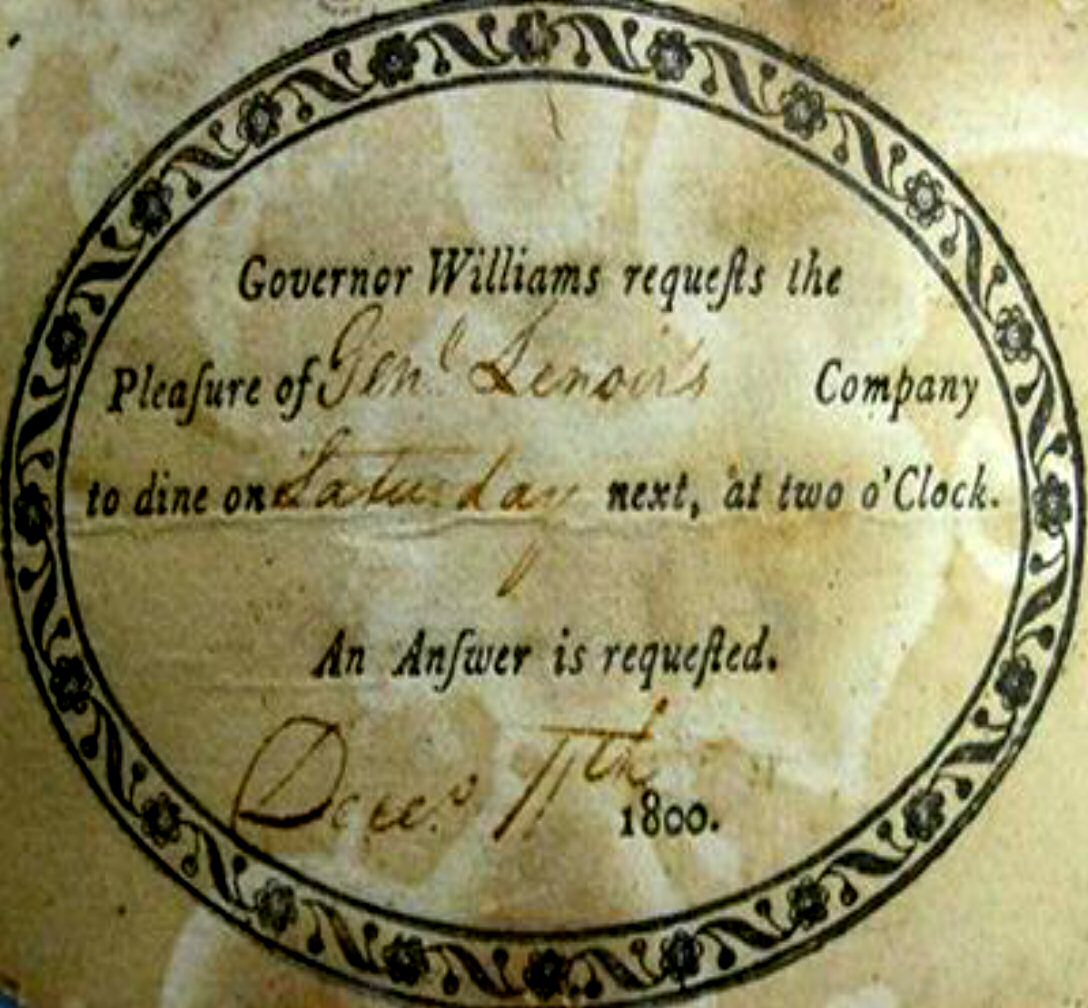
Below you will notice the long S was still in use in 1800, a form of writing that was long thought of as abandoned back in the 18th century (1700s).  


Although I love penning Georgian and Regency romance novels I refuse to abide to a rose-tinted perspective of historical periods in which men of means acquired mistresses at will, and libertines were rife. Nor do I ignore the facts of parish church registers relating to marriages and births, which declare six and seven month pregnancies were higher during the period of the Napoleonic Wars than the post-Restoration years of Charles II and his libertine reign. Whilst it is true to say, it takes two to tango, by that maxim a lot of young Georgian and Regency misses lost their virginity long before they were marched down the aisle by a father who may, or may not have held a pistol to the bridegroom’s back afore hand. Thus I am bold enough to present stories of a realistic bent in which passions of a romantic nature oft start innocently enough, until a potent kiss stirs feelings and needs that override good sense in the heat of the moment. Hence my novels and novellas range from sensual to steamy; as and when the characters feel the need to express more than mere sentiments with spoken words.

It is also a myth inspired and perpetuated by authors of Regency romances that most, if not all young ladies of good breeding had chaperones. Jane Austen frequently walked alone in places where she lived, not least in the City of Bath, thus her heroines' reflect that same freedom to come and go as they wished and without parental supervision or companionship of a maid, maiden aunt, or other. The reason adult females accompanied a young miss on her first outing to Almack’s/Almacks – either form of the latter is correct, if one looks at differing time-frames on invitations signed and dispatched by the patronesses – the same rule applied to the opera or the theatre, all places where it was considered unseemly for unsupervised young ladies to attend in the company of adult gentlemen.


A secondary myth abounds to do with Almack’s/Almacks, in which young gentlemen could secure an invitation for a young lady to attend at functions. No, that is utterly incorrect – not even if the young gentleman was her brother or cousin could he obtain an invitation: the only exception being if that gentleman was her legal guardian. Aunts and married female cousins could elicit an invitation from the patronesses if the aunt or cousin had access to or a close connection to a patron of Almack’s/Almacks inner circle.


Wednesday, 15 March 2017

Penning earthy Georgian and Regency Romances.


“...she had never thought it was possible to fall in love at first sight...”

An arranged marriage against her will and Erica Townsend is at odds with her father, and worse, he is not the father she had thought he was when friends and acquaintances of his pay visit to the family house. Albeit initially intrigued and voyeuristically mesmerised by an event that unfolds within the garden arbour, she and her younger sister decide they cannot remain within a house where Erica’s betrothed debauches other women at will, as does their father. Desperate in seeking the help of a gentleman neighbour who is sweet on her sister, their chosen escape route is fraught with temptations along the way. Whilst Erica dares to appear bolder than she is, can she truly trust the Earl of Epsom, or is he as much a libertine as her betrothed?


If you feel inclined toward realistic and earthy accounts of Georgian and Regency romance and love stories that are often linked in some way, you may have discovered from reading some of mine, that characters from one book often reappear in another. I sincerely hope readers enjoy discovering who fraternises with whom in the years spanning the Georgian period and the Regency era!


Wednesday, 1 March 2017

Purchase of Military rank in Regency era - before & after.


The Rose tinted aspect of Regency Romance Novels & the thorny issue of missing key facts when writing Historical Fiction. 


Army


Not all regiments were open to purchase of rank! The RMA (Royal Military Academy) was founded in 1741 at Woolwich to train gentlemen cadets for the Royal Artillery and Royal Engineers, and later for the Royal Corps of Signals.

The RMC (Royal Military College) began in 1800 as a school for staff officers which later became the Staff College, Camberley. A Junior Department was formed in 1802, to train gentlemen cadets as officers of the Line. A new college was built at Sandhurst, into which the cadets moved in 1812. After 1860, the RMC succeeded the East India Company’s Military Seminary as the establishment where most officers of the Indian Army were trained. Following the abolition of the purchase system in 1870, attendance at Sandhurst became the usual route to a commission. The college was enlarged in 1912, when New College was built.

The RMAS (Royal Military Academy Sandhurst) as we know it today at Sandhurst was formed in 1947. It was descended from two older institutions, the Royal Military Academy (RMA) and the Royal Military College (RMC).


Commissions could only be purchased in cavalry and infantry regiments, and therefore up to the rank of Colonel only. Commissions in the Royal Engineers and the Royal Artillery were awarded to those who graduated from a course at the Royal Military Academy at Woolwich, and subsequent promotion by seniority. Such officers (and those of the Army of the British East India Company), were often looked down upon as being "not quite gentlemen" by officers who had purchased their commissions. Not all regiments were open to purchase of rank!


Navy


The Royal Navy never practised the sale of commissions, with advancement in officer ranks being solely by merit and/or seniority. But, if your father was an admiral or vice admiral the chances were good you would attain advancement faster on the proviso you passed relevant exams/tests!  

Time and time again I keep encountering blog posts referring to purchase of Army and Navy commissions, and many of the blog posts are inaccurate. So this is a short reminder for authors of not only Regency novels, but other periods in history where you have chosen a British naval officer as your hero etc. No one, not even aristocrats could "purchase a commission" within the English Royal Navy. New recruits had to start at the bottom as "Midshipman" and that went for any boy from a good family to a duke's son. Some boys, such as Horatio Nelson, Viscount Nelson, started as servants to a senior officer. 


Midshipmen were usually the sons of wealthy or aristocratic families training to become commissioned officers. The majority were from seafaring families with a long history of serving King & Country at sea, either as naval personnel or became privateers once they had gained a captaincy. They joined the navy at the age of 12 to 14 and were easily identified by the white patch on the collar of their uniform. They were taught navigation, astronomy and trigonometry by the ship's schoolmaster as well as undertaking watches on deck, To gain higher rank they were required to sit exams, stiff exams, and many failed and often left the navy and instead purchased a commission within the Army Regiments.

Monday, 13 February 2017

New Release & Spinsterhood Plots!


"A love at First Sight novella"


The Back cover blurb:

One grave transgression in her past, and Lady Louise de Winter, has accepted all hope for love and romance is but a dream she dare not embrace.

Aware her semi-closeted existence on the Harcourt Estate is no more, and a substantial inheritance awaits her pleasure, her friend Count Casarotto suddenly brings his personal troubles to her door and seeks sanctuary. Worse, pursued by officers of his majesty’s regiment of horse, Louise endeavours to conceal his presence despite qualms as to his innocence when the bare facts are laid before her. What is more, devastatingly attracted to the senior officer, Louise battles to retain sense of propriety as burning desire within takes hold. But despite Major Fitzwilliam’s reassurance he cares not a jot about her past, the truth remains she is not as other young would-be brides. Therefore, dare she give her heart into his care? 


And my thoughts on writing Spinsterhood plots!

Spinsterhood plots are quite a common trope within Georgian and Regency novels, and in general the heroine becomes a governess or a companion to some flighty young miss, which in turn provides sense of purpose in her otherwise lonely existence. Often as not the heroine secretly falls in love with a father or guardian, and he likewise secretly falls for the sometimes irksome, and or withdrawn governess, and as time passes, often by way of tedious blow-by-blow accounts of the hero and heroine glimpsing each other amidst her domestic duties and his the drudgery of business, eventually a love bell will ring and the hero and heroine finally admit their feelings for one another.  Whereas the Lady Louise de Winter amounts to none of those things so readily associated with spinsterhood. She bears a secret from her past, and her present life is not as expected of a spinster. Louise is a woman who has love to spare but dare not display it. Born to wealth and a title, and on the death of her father she has a substantial inheritance, and independent income. But love at first sight, as happens for her and the hero in her story is akin to a lightning storm, each knowing something has sparked between then, both aware it can burn if they cross the divide without sense of honesty. Truth, absolute truth, can sometimes kill desire, and therein lies the risk of losing someone who touches your heart as no other has. Some dilemmas are best served in the heat of the moment, or delivered with cold realism before the touch paper is lit?  But Fate is unpredictable, as is the outcome of Louise's story as she walks and rides in her father's footsteps within a second place he truly thought of as his home!  


       Amazon UK    Amazon US

Thursday, 26 January 2017

New Steamy Novella.


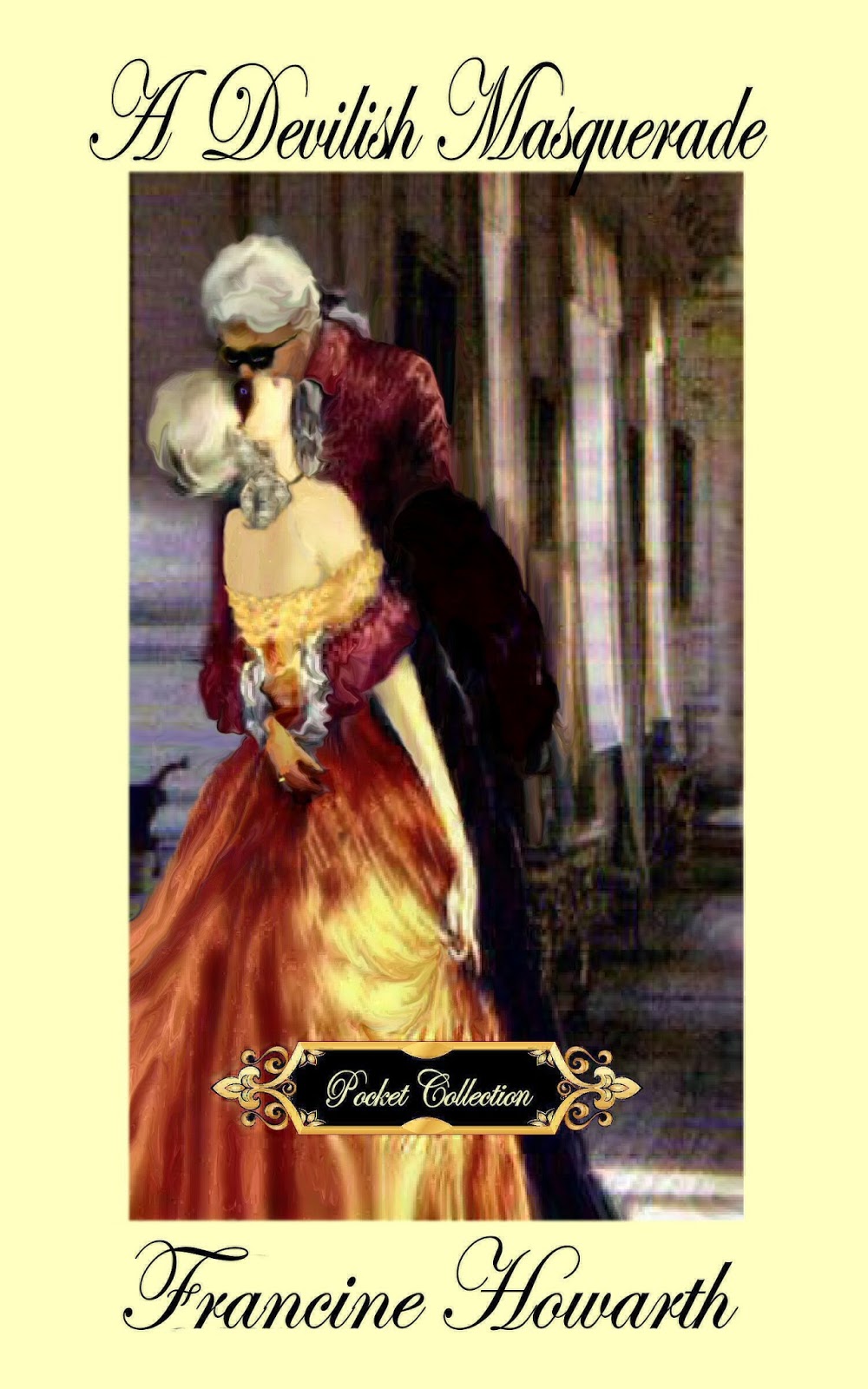
A Coaching Accident, a Regency New Year Fancy Dress Ball, and a Devilish Masquerade will ensue.

The cynical Melbourne, Earl Standish, has resigned himself to a bachelor existence in which a mistress is a damn sight safer than young chits with mother’s who are hell-bent on securing a title for their daughters. Stealing the cherry as sporting game has never been his gambit, until that is, a coaching accident, involving his sister and the Danby family, thrusts an irresistible young lady into his sightline. Conventions of hospitality must be afforded to the rescuers of his sister, and with a New Year ball imminent at Norton Priory, Standish is hopelessly smitten, but he has two brothers and the elder of the two is a renowned cherry stealer. Can the Earl overcome his misgivings and rejoin the Marriage Mart – and will the rakish brother let him steal away with Cecily Danby?


True to the traditional romance of Regency England coaches and horses feature greatly within Regency novels, and of course coaching accidents were not as uncommon as modern-day thinkers tend to assume. Some coaching accidents were fatal for passengers, especially those thrown overboard from up top,  Other coaching accidents, often in perilous weather conditions were almost as deadly. Thus a coaching accident features in this novella, and is the opening to a tale involving the original Cinderella fairy tale, though Cecy is no poor mistreated Cinderella. But the story reveals all, so I'll leave it there, except to say the coaching accident leads to a stay at Norton Priory, and that  is where Cecy learns who she really is, after seventeen years of believing she is someone else! 


So what does this once ecclesiastical building hold in store for Cecy?  


Amazon US      Amazon UK

Saturday, 7 January 2017

Dispelling Myths - People didn't take Baths

Dispelling Myths - People didn't take Baths in 16th-17th century etc - in reference to Cleanliness is next to Godliness!


In actual fact, throughout history, people bathed more than historians declare - as can be seen within private journals circa 17th century. The reason they wore perfume and carried pomanders was to kill the stench of the streets where the saying Gardy Loo had purpose before the pitching of effluent from chamber pots to street gully. Hence the wealthy abandoned cities in warm weather, as often as they could and retreated to their country abodes. There's a huge myth the aristocracy abided to seasonal Parliamentary sittings - not those who didn't give a toss about politics, and that was the majority. Yes, they had town houses, in many cases owned streets of houses leased out to the middling merchant/trader classes, but in most cases they only attended specific events, and tended to swan about with a mistress rather than have their family with them. Even the court retired to the country - often. The upper merchant class owned their own vast properties, but of course the lower class were unable to take flight to fresh air unless they paid visit to relatives who were a bit farther distant, bearing in mind Chelsea was a village with open green fields as were other places of note such as Putney where there were windmills on Putney heath - Greater London didn't exist!


Casting stone built Roman baths aside, Wooden baths were little different than wooden baths of the 16-17th centuries resembling cut off ale barrels. Not the little brandy and port barrels, the biggies. Then there were tin (Roman baths) carried with armies for officers and tin baths carried on alongside wooden ones for centuries. Then came the Georgian era and the ever present copper pans, kettles, and yes, Baths. Note the differing wooden baths, the tin one used in the Poldark series, and the Georgian copper. 


For more in depth reference go here