Showing posts with label Historical Romance Book Covers. Show all posts

Sunday, 14 October 2018

Jane Austen Fan Fiction novel


A Traditional Sweet Regency Jane Austen Fan Fiction Novel -
A Pride and Prejudice Sequel.
Believe me, this was hard work and I admire any author who picks up the gauntlet and writes a JAFF novel. I explain why in the Introduction to the book!


Book's blurb/premise.


~ Nothing is ever quite as one might imagine ~

The new mistress at Pemberley is quite sure all Darcy’s friends, and his neighbours, will be keen to make his wife’s acquaintance. But several weeks later and no callers, who is Belle, and can it be true, Darcy has a mistress and a love child? As tensions rise and turmoil ensues, the three married Bennet sisters are reunited at Pemberley and duly set out to unravel the mystery of Darcy’s past. But when Belle and Bonnie arrive at the house, Darcy steals the ground from beneath Elizabeth’s feet. Likewise a letter from Longbourn heralds such favourable news everyone falls utterly speechless: until Lydia explodes “Heavens above, what a giggle!” 
~
I confess I have never aspired to emulate any other author's writing voice (style) and for me this was a fun exercise in writing a Jane Austen Fan Fiction novel which I am of mind has become one of French Farce proportions, and dare I say, it's a modest Homage to some of Jane’s delightful characters from Pride and Prejudice, characters beloved by readers across the globe so I pray I've not in any way besmirched the names Bennet, Darcy, or Bingley.  


I did place this at Amazon as a pre-order copy with a temporary unedited draft whilst the novel was in the hands of my editor, and come the deadline day to upload the edited copy Amazon had a glitch on the system and the previewer was down as well. The problem being the uploads (enacted several times) would not overwrite the draft copy. To cut a long saga short the book went live with the wrong file, and Amazon tech guy couldn't upload the file either. I was advised to unpublish and republish, which I have now done. Typically a reviewer sought to point out the fact it  was republished, and assumed it was solely to negate two negative reviews at Amazon com. Well I would have been foolish to lose several reviews, two of which were 5 and one a 4 star on the UK site, and all merely to negate two malicious reviews at Amazon com. Though I will thank the two reviewers, Mrs Darcy and Kindlelover, because every review helps in revealing the "dark side" of those who stalk authors for whatever reason best known to them.  Aside from that I have since been granted the Jane Austen Readers' Award. So am a bit chuffed!            


Available worldwide at Amazon - e-book, paperback, and Kindle Unlimited: 

Amazon UK    Amazon com

Sunday, 29 April 2018

Book Covers Matter - or do they?


“Book Covers Matter - Book Covers Matter”
The above is the age-old Mantra of publishers, book designers, and authors alike.
Then there’s the Secondary Mantra for Historical Novels!
“Historical Accuracy is a Must- Historical Accuracy is a Must”
~
And one would suppose that in the sphere of Historical Romance the Accuracy Mantra would be essential to depict accurately a Genre, Period in History, and Theme.
Not so, Not so... Anything goes!

Sadly, Historical Romance novels have transitioned across the years from the early days of elegant covers with inanimate objects or sensual painted pose.


to the Bodice-Ripper era


to the Headless or semi-headless Heroine era


to the now Fantasy era of women bare-backed/half stripped, and those models in modern shirts. 


Ahhhhhhhhh The shirt is all Wrong!


Effectively covers have gone from the sublime to the ridiculous with supposed Historical Heroines depicted wearing modern Prom dresses or Fancy Dress Disneyesque frocks instead of Period Perfect Gowns. If that wasn’t enough to have officiandos of Historical accuracy cringing as they peruse book lists at Amazon, the mens' shirts can cause outrage amidst re-enactor communities and the Period Specific nerds, the latter of which I am one of many!


A shirtless hero is by far preferable to one wearing incorrect attire for the period depicted within the pages of the novel.

  Nap-Shirt 


Lace Jabot


 And it should be remembered button-through shirts didn’t exist prior to the 18th and throughout the Georgian period as a whole - inclusive the Regency period. But true enough, during the late Victorian era button-through shirts gradually came to fruition. So do not have your hero or heroine unbuttoning his shirt, unless you are writing a late-Victorian/Edwardian era novel. And remember smock shirts were still customary wear for the average Joe, as were nightshirts. It may also surprise readers and authors to learn ready-made attachments, such as frilled cuffs and a jabot - the former affixed with looped-through ties and the latter with back-buttons.


Button-Through Victorian Dress shirt!

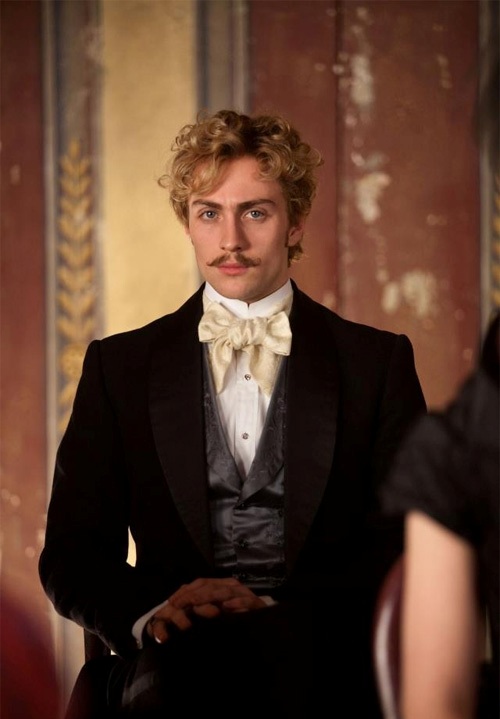
Don't you just love that moustache... Tickle me, do...

Wednesday, 27 September 2017

17th-18th-early 19th Century furniture.

From crude basic early chairs of ye olde England and Scotland, Tudor and Jacobean are notable, often beautifully carved wood-workings, and later came the more elegant styles of the royal courts of Louis XVI, and the Georgian/Napoleonic era, thus knowing a common “Settle” from a “Settee” or “Sofa” takes on new meaning for authors researching these periods in history.


After all, who really looks at a Settle and sees it as a basic template for Settee, and where did the sofa derive from? And yet, all three are merely a glorification of former designs from differing places. 


Jacobean Settle circa 1600s.  There were box settles too and ornate carving, some of the settles with drawers, some with cupboard doors beneath the seat, some with lift up lids.  


A Georgian Box Settle - note storage space, and it's remarkably plain. 


Early 18th Century Settle

During the latter half of the 17th century (English Restoration) Charles II wished to emulate the glories of the French Court, and regardless of expenditure, he had the royal apartments within the royal palaces refurnished and refurbished with plush-padded settees, chairs likewise padded and covered with tapestry cloth.


17th Century "Settee" - a refinement of a settle -  the design lasted throughout Charles II era into the Georgian. 


By the dwindling of the Stuart era, Queen Anne, furniture of Queen Anne’s reign became far less chunky leg-wise and decidedly elegant with a feminine lightness to structure and lighter fabric coverings, and continued thus into and throughout the Georgian era.


Queen Anne Chair - likewise Queen Anne Settee followed the same pattern for open-end armrests.


Queen Anne "Sofa" - here we see the high solid sides!


In the short period of the Regency era, the resurgence for Roman architecture applied to the building of many houses in the early 18th Century became fashionable and readily noted at Chatsworth, Blenheim Palace etc. So too, by the mid-Georgian period stone plinth stools and seats of Roman times became apparent with wooden replicas in the form of plush settees, chaises, and long footstools.


Here we can see the scrolling aspect and the high sided  "sofa".


Chaise Longue


Roller Stool - Roman influence.


Arm Bench - Roman influence. 

So where do sofa’s fit into the equation, one may ask? Then we must look to Eastern Europe and the countries bordering Asia, to Persia as was (now Iran), to Turkey, and Arab nations, where high-backed, high-armed sofas were commonplace.


 Arab -Asian Sofas


By the mid Victorian era, chunky furniture once again became in-Vogue, but I’ll not go there for much of it was ugly and I don’t pen novels in that period of history. At any rate, that’s my excuse to stop at the end of William IV’s reign.

Look out for next historical aside with Wardrobes and Armoires. 

Sunday, 18 June 2017

Pushing Romance and Romantic Boundaries.


As an avaricious reader of books, and quite long in the tooth age wise, of all the wonderful books read to date, there are four that I treasure. Namely that of War & Peace (Tolstoy), The Magus (Fowles) and The Green Mantle (Delderfield). All the former were penned by men, and I learned much from a man’s perspective of love and how men view women. 

But the fourth book is Daphne du Maurier’s Frenchman’s Creek. It is the one book she laid claim to as a romantic novel.

In a personal sense, I am of mind her writing is romantic in itself, albeit most of her books have a dark side. To give a brief summary of Frenchman’s Creek, let us imagine the glorious spectacle that was the court of Charles II (the Merry Monarch).


Amidst the glittering array of Charles' courtiers, hell-rakes and courtesans abound, and unseemly amours cause marital strife, while common whores share the King’s bedchamber. But one young wife has had enough of lies, deceits and court politics. She takes flight with her children and retreats to her husband’s remote Cornish estate. Expecting peace and tranquillity, trouble of a very different kind exists in the waters off the Cornish coast. Subsequently, Dona – Lady St. Columb – has no idea that far more excitement and daring than experienced at court is about to turn her world upside down and inside out. Had a soothsayer told her she would fall in love with a French pirate captain, she would have laughed at such a silly notion. But Captain Jean Benoit Aubrey is not your average pirate. He’s well-educated, well-read, and Dona falls deeply, madly in love with him. She indulges in dangerous and daring escapades with her lover captain. But all good things must come to an end, and the end in this novel is not always as many readers expect. Without doubt, Frenchman’s Creek is a clean novel sex-wise and reader imagination fills in the gaps. Some people love Frenchman’s Creek, while others hate it.

But you see, in the same way the heroine dared to break with convention so does the author. Daphne du Maurier, who gives us a thrill-packed action romance and then steals an HEA right from under the reader. But could she have done otherwise? A sacrificial choice must be made by Dona, Lady St. Columb. She must choose between true love or that of her children and husband. What one has to remember is that in the 17th century women risked everything for love outside of marriage, where men risked nothing. Perhaps the emotions are so strong in this novel because it reflects in part a decisive moment in the author’s life: though that is a story in itself.  

In the same way Daphne broke with convention and her novels daringly ventured to the darker side of life and emotions, she also highlights the dangers of illicit affairs and the subsequent fallout. I too throw romance novel conventions to the wind as an author. Perhaps I outgrew the typical romance novel formula at a young age because they all followed the expected norm of hero meets heroine, they fall in love, conflict arises, and ends with a fairy tale HEA. Of course authors did and still do strive for originality by leading their characters along differing paths, differing situations, and differing places, but the heroine always ends up with the expected hero. But perfect fairy tale romances sell, don't they? Whereas shock plots upset readers. Well yes, but Daphne's novels pushed boundaries, not in sexual matters per se, she was cleverer than that by setting precedence for huge emotional flash points, and I really love it when I encounter novels where the author has thrown the fairy tale plot to the wind, picked up the broken pieces and rearranges them to beget an unusual plot, a daring plot to test the mettle of the characters. That's precisely what Daphne du Maurier does in Frenchman's Creek.

Whether sacrifice entails convention and the safety of what is, or the thrill of the unknown, Lady St Columb is faced with a crucial heartrending choice. She must choose between the love of her life, or her husband and children... Her final choice for many readers is the right one, for others not so. But you see, it's not really a Happy Ever After, it is compromise and sacrifice and the what-if will haunt her, perhaps to her dying days. Similarly in Daphne's novel The King's General, tragedy, selfish need, and a what-if abound!   

It is the what-if factor that fascinates me, and writing romance for me is a roller-coaster ride with no guaranteed HEA. Characters can be fickle, arrogant, and they don't do as expected. They sometimes rebel, or unexpected events occur and cause trauma. Some heroine's stand and fight for what they want whilst others turn away and take flight. Similarly a hero may want and as good as takes what he wants, with permission of sorts, whilst another hero may be confronted with walls at every turn and he has to climb them and jump through fired hoops to gain what he wants. But what of the hero who gained what he wanted and loses it and is left with the dilemma of What did I do Wrong? Could you as an author write a tragic love story which is just as much a romance as the standardised  romantic novel?  I have, and I even penned an erotic novel in which the heroine learns the difference between lust that is only skin deep, and that of true love. But, I am a rebel at heart. 

If I've intrigued you with writing unconventional romance novels, as well as steamy romances and you'd like to see a list of my books, please browse the "my books at Amazon" feature on the bar top of this page.              

Thursday, 26 January 2017

New Steamy Novella.


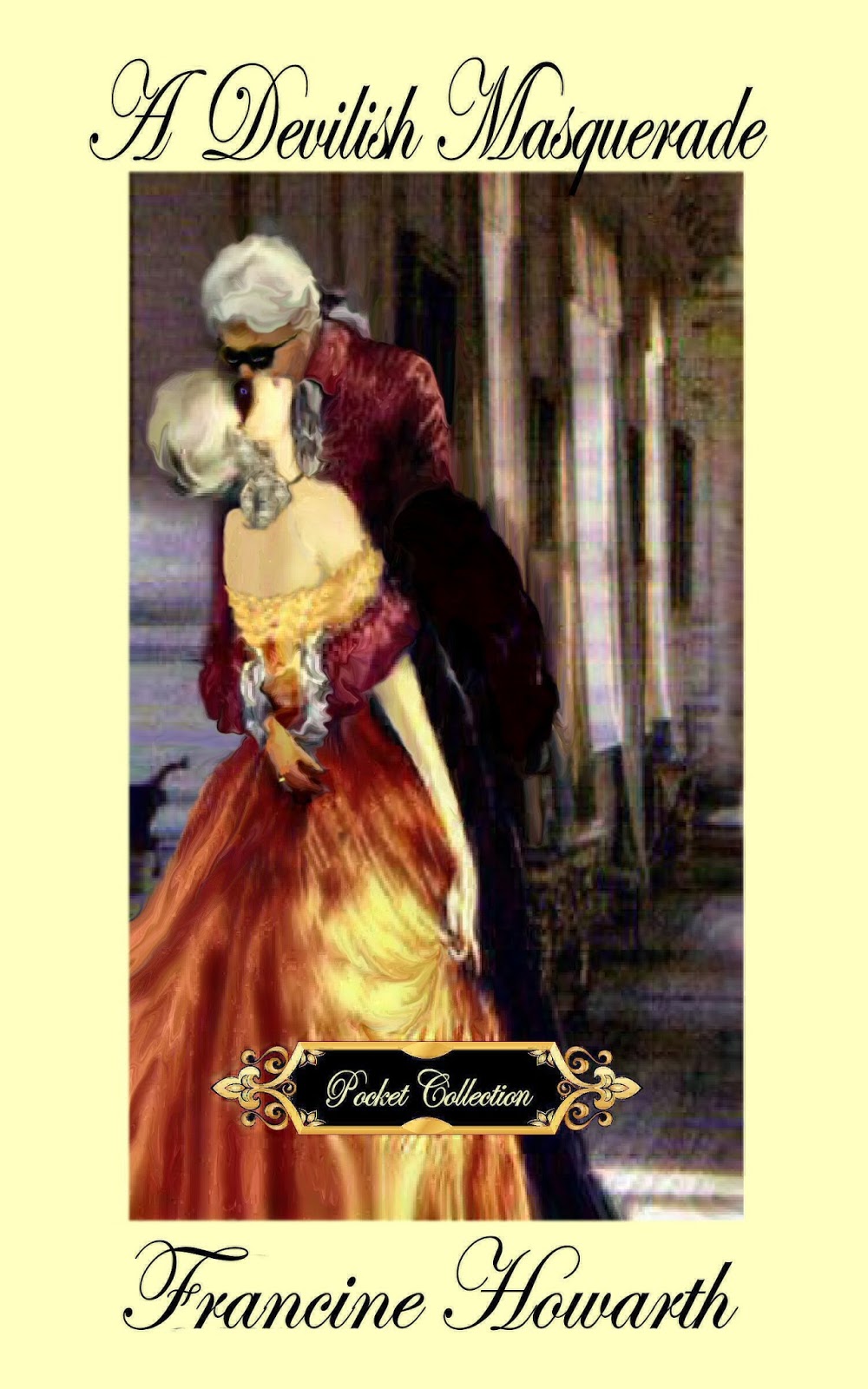
A Coaching Accident, a Regency New Year Fancy Dress Ball, and a Devilish Masquerade will ensue.

The cynical Melbourne, Earl Standish, has resigned himself to a bachelor existence in which a mistress is a damn sight safer than young chits with mother’s who are hell-bent on securing a title for their daughters. Stealing the cherry as sporting game has never been his gambit, until that is, a coaching accident, involving his sister and the Danby family, thrusts an irresistible young lady into his sightline. Conventions of hospitality must be afforded to the rescuers of his sister, and with a New Year ball imminent at Norton Priory, Standish is hopelessly smitten, but he has two brothers and the elder of the two is a renowned cherry stealer. Can the Earl overcome his misgivings and rejoin the Marriage Mart – and will the rakish brother let him steal away with Cecily Danby?


True to the traditional romance of Regency England coaches and horses feature greatly within Regency novels, and of course coaching accidents were not as uncommon as modern-day thinkers tend to assume. Some coaching accidents were fatal for passengers, especially those thrown overboard from up top,  Other coaching accidents, often in perilous weather conditions were almost as deadly. Thus a coaching accident features in this novella, and is the opening to a tale involving the original Cinderella fairy tale, though Cecy is no poor mistreated Cinderella. But the story reveals all, so I'll leave it there, except to say the coaching accident leads to a stay at Norton Priory, and that  is where Cecy learns who she really is, after seventeen years of believing she is someone else! 


So what does this once ecclesiastical building hold in store for Cecy?  


Amazon US      Amazon UK

Wednesday, 9 March 2016

New Georgian/Regency Series - The Trevellians' of New-Lyn


Dear Reader,

A year past I wrote a Romantic Regency Murder Mystery titled For Love of Captain Jack - and shortly after publication day I received a lovely email from a reader. So intrigued by entries from a journal penned by the Captain's deceased mother, the reader expressed interest in knowing a little more about his parents prior to the young captain's story. Of course I did indeed mull the prospect of writing what could become a mini-family series, but to do so would entail writing the books in reverse order. Another problem that arose was in how to reveal the individual viewpoints  of Admiral Trevellian, and that of his beloved Comtesse Montecute, and all without undue exposure of prior events associated with the murders and mysteries within their son's story. Thus Adelle Montecute's journal plays a vital role as the books' progress, spanning the years and lives of the Trevellians. The first two stories are set within the Georgian period, the third most definitely within the Regency era. And I can only hope you will enjoy the stories where two people fall hopelessly in love and defy the conventions and rules of society by indulging  in secret liaisons.   


An emotional and poignant tale of murder, mystery, and romance.

After the dreadful murder of la Comtesse Montacute and her sons, in the grounds of the family château, le Comte and his daughter are mortified by turn of events. Who did it and for what reason? Utterly distraught, they accept the help of an English marquis and return with him to England. A dreadful dilemma then unfolds. A secret tryst between Adelle and a young admiral leads to untold heartache when Adelle’s aunt declares she is spoken for. Thus Adelle would rather risk life on the streets with a fellow countryman than abide to her father and her aunt’s desire to see her wedded to the marquis. But when a man of cold countenance and vengeful nature is hunting her, as he would a fox running ahead of his hounds, she fears the marquis will win the day by means most cruel and dastardly. 


The Admiral's Sin - A Romantic Murder Mystery (The Trevellians' of New-Lyn Book 2)
A Heart-wrenching story of loss, love, and revenge.
.
Wanting to believe the past is in the past and friendship can be reinstated with an old adversary, Admiral Trevellian loses far more than he ever bargained on by trusting the Duke of Norfleet. Betrayal runs deep, so deep Trevellian awakens to discover his wife has stolen away with her French coachman, and fearing the worst that she’s taken their son, Trevellian is further shocked to discover the boy has been left in his charge. Wielding a sword in battle is quite different than wielding one in pure anger and grievance at another’s insane jealousy and destructive bent. But hold the duke to account, Trevellian will, until satisfaction is met with cold steel to flesh. Life for Trevellian is utter purgatory, and whilst he believes death will cease his unbearable pain, his son determines otherwise.


Finally, book 3 - another love story!


It is 1814 Regency England, and Captain Jack Trevellian RN (Royal Navy) has returned home to South Devon. But on the eve of his return, a young woman is murdered. Three more murders occur in quick succession, and Captain Jack is convinced someone wishes to see him dangling from a hangman’s noose. Determined to uncover the identity of the killer, Captain Jack and his army friend Captain Lester Knight, stir more trouble than anticipated when their aristocratic neighbour brings rank to bear in matters of the judicial system.


Although young women in the district are warned to travel about in pairs, when the vicar’s daughter and a young lady (of whom Trevellian is rather attached) hear blood-curdling screams in Lyn Woods, they are thankful Captain Jack provided an armed guard to keep them safe. Nonetheless, wilful, bold and daring, and all for love of Captain Jack, Alathea Velvet Hawkesworth attempts to lure the murderer from the shadows at a grand masque ball. The true identity of the murderous villain is not as imagined, and she fears she will die a terrible death whilst laughter, music and heady scent of roses drift on a balmy evening breeze, and all within a palatial setting.