Tuesday, 5 June 2018

The Creation of Georgian Bath!


This is the City in which Jane Austen removed to from Hampshire, at a time in her life when the realities of renting property and feeding a household required a frugal existence. She related her findings of hardship within Sense and Sensibility, though her existence as a Parson's daughter was in stark contrast to that of the Dashwood's fall from the grand lifestyle of a vast country estate to the meagre confines of a little cottage in Devon. Nonetheless, rent paid for a house in Bath and no land on which to grow meat or produce for the house, monies soon fell short in Jane's life. Later, from her letters, we see she relied more and more on family charity and thereby a roof over her head, thus she moved from one residence to another with a great deal of regularity. There is a strange circumstance too, which is rarely spoken of - why did the Austen children live elsewhere rather than within the family house. Why did the Knight family adopt Edward? It was common practice in Jane Austen's time and long before and you can read why here. Cassandra too lived away a great deal, residing with family and the family her brother married into, hence numerous letters betwixt Jane and Cassandra. Read Jane's letters in Diedre le Faye's book compilation of Jane Austen's Letters.                

The City of Bath, set within the Vale of Avon, and within the County of Somerset, has long been looked upon as the Georgian City of Bath. And ever since Jane Austen lived there, albeit for a short while, few people realise her preference lay with Bristol, Clifton, in particular. Why might that be? If you've been to, or know Clifton, the answer lies in its elevation and the views which were spectacular in her day. 

Click on picture to enlarge!


View from Clifton before the grand terraces and crescents of Georgian Bristol were built. 


From Clifton she looked out across Bristol and the surrounding countryside to the River Avon below, and to the River Severn and the Bristol Channel (tidal waters) running betwixt the West Country and Wales. Clifton was quite unlike Bath, or the old City of Bristol. Although both city centres are set down in a basin surrounded by hills, quite small in modern terms, and at one time consisting of mediaeval buildings. Bristol had the advantage as the second most important sea port in England during the 16th-17th centuries, it was fought over time and time again throughout the years of the English Civil Wars (1642-1649), but as with other great sea ports, such as Plymouth, in the days of Sir Francis Drake, other ports gradually took precedence with shifting fortunes, political and military necessities of war with Napoleon. 

Sadly, in the height of the slave trade Bristol became blighted with a bad reputation for harbouring slavers. Hence as the abolition movement increased in momentum and focus centred on Bristol port in the late 1700s, slavers sought other ports and moved ships up north and to London with wares brought back from the West Indies to disguise their other trade.       

Bristol port was originally in the heart of the city, long since built on and all but disappeared barring a few remnants of the port, and the new port lies farther out on the Western edge of the city.


Bristol Harbour in the 1700s.   

The building of Georgian Bath began with the building of Milsom Street and other in 1762, instigated by Thomas Lightholder. The majority of the buildings were grand town houses incorporating existing detached properties, and it quickly became a commercial street when a bank took up residence followed by goldsmiths, modistes, tailors, et al. Bath was beginning towards a hub of social activity associated with the taking of the waters at the hot springs of the Roman Baths. Thus, Pulteney Bridge was completed in 1774, and likewise Great Pulteney Street and Laura Place became desirable residences. Before all that bridges were far lesser and required a little forethought in which route to take from Keynsham bridge to old bridge in bath, the same in coming from London to Bath, and schooners actually navigated upstream to Bath from Bristol on high tide. 


Old Bridge Bath. 

Earlier John Wood the elder (architect) had a grand visions for new build projects. He leased large tracts of land beyond the old city walls - his plan included Queen Square, the Parades, the Circus and other great ventures. His perception involved the grandeur of palaces combined with the practicality of mini mansions as private houses. Similar to today's builds, plots were individually leased to builders & tradesmen, all able to cater for tenants of differing purses, but each build was subject to Wood's façades of uniform Georgian splendour. His grand plans were created with the visions of Palladian grandeur, not altogether new within England, for similar could be seen with vast country estates such as Blenheim Palace, the Duke of Marlborough's grand house completed in 1722, and of course, the Duke of Devonshire's country estate Chatsworth, the new build which began in 1687, though both have Stuart influence as well.    


Two images of Pulteney Bridge to show how beautiful it was during the late 1700s


In both pictures one can see the original diagonal weir, not the modern weir of today that was built in the 20th century. At either side/end of the weir stood two grain mills!


One of the first Crescents to be built was The Royal Crescent and later, Lansdown Crescent (upper edge of pic in the distance) - note the boats on the Avon.


Another view of Lansdown Crescent.


And here we have the Royal Crescent - originally known only as The Crescent.  


Second perspective of the RC. 


And of course, as authors, we have to remember only the Lower Assembly rooms existed in the early part of Georgian Bath along with the original Pump Room.


Lower Assembly Rooms with Harrison's Walks (Gardens) Now part of the Parade, since the lower assembly rooms no longer exist.


The Pump Room - 
And one simply cannot mention Bath and leave Beau Nash out of the frame, he, who became the master of ceremonies within the City of Bath's social whirl, and he really did rule the social order with a metaphorical iron glove. 

Thus, the building of Georgian Bath plays a small background roll to my novel -
In Love with a Portrait. 

Sometimes it's nice to escape Regency England and step back in time to the Georgian period proper. And that's what I did. 


And this is Harrison's Walks in the present day - Parade Gardens.


Book Blurb:

... “No one, absolutely no one will dare disturb us, unless the house catches fire”...

Cassandra never envisaged a week in the countryside with her cousin would lead to childish mischief. The prospect of the village stocks looms when they are caught trespassing within a grand country house. However, the law is the law, and the price of freedom in Cassandra’s case proves more costly than imagined, for she loses her heart to the very man whose portrait Sarah had fallen in love with, the man Sarah insists she will tempt and seduce at will. Cassandra’s release from custody by the man himself fuels jealousy and rivalry between her and Sarah. But when shocking revelations of a scandalous affair and illicit passions set precedence for a hasty elopement, stunned by it all, Cassandra discovers passionate asides can lead to true love and romance in the strangest of circumstance.


Friday, 25 May 2018

Ratafia - Innocent Regency Cordial?

Ratafia


Renowned as a ladies cordial within the Regency era, though a much loved drink throughout the Georgian period, it is anything but as innocent as implied.

The ingredients suggest ladies enjoyed a little alcoholic tipple more than might be thought by those who had never partaken of the "supposed innocent" cordial!

Potent - or what?


Ingredients:


  • 1 quart of brandy


    • ½ bottle champagne

    • 1/2 cup of gin


    • ¼ cup of sugar

    • 2 oranges

    • 2 cups of cherries, pitted and squashed

    • 2 cups of blackberries

    • Dash of cinnamon

    • Dash of nutmeg

    • 1 teaspoon powdered rosemary
    • Three cloves (bruised)

    • ¼ cup crushed almonds

    The Process:
    Mix in a gallon glass jar. Cap jar and shake. Store in dark cupboard for three weeks, removing once a week to shake jar. 

    After three weeks, strain liquid through a cheesecloth, pressing down on solids to release their liquid. Distribute and store in several pint jars or tightly corked wine bottles.

    Tuesday, 15 May 2018

    Georgian Hairstyles pre-Regency era.

    Hairstyles of the Georgian period! 

    This article attempts to address the balance of hairstyles and fashion, because far too many readers and literary critics (who deem sense of expertise in matters of Georgian England) often seem to forget the greater part of the Georgian Period occurred within the 1700s - being that of  the 18th Century. Hence modicum of confusion arises with the coming of the Regency Era of the 1800s, being that of the 19th Century in matters of fashion, which includes hairstyles.


    In this picture are examples of Georgian hair styling.
    The first image represents back-combed hair with short ringlets and powered for fashionable effect.
    The second image is a young lady with natural hair in a pretty and becoming style, and this style remained popular for unmarried ladies until the coming of the Greek revivalist movement during the Regency era, when men went for the Corinthian, the Adonis, and other fashionable bent, whilst women went for short curls framing the face, top-knots and dangling ringlets.  
    The third picture is a strawberry-roan wig, no doubt similar in colour to the ladies natural hair colour, also lightly powdered.    

    To take stock of the early/mid part of the Georgian Period of England, it helps to remember Marie Antoinette was Queen of France, wife of Louis XVI at that time.


    Marie Antoinette.

    She was renowned for her outrageous wigs, but not all women during the Georgian period wore wigs, though some did, as did the Duchess of Devonshire when married, but when young she merely lightly powdered her hair and had it styled to the fashion of one long coil of hair over her shoulder similar the middle image top of page. 


    Duchess of Devonshire

    Other ladies of note, namely Lady Sheffield,  wore long style wigs.


    Whilst Mary Hamilton had her own hair styled and powdered.

    The following images are of TV/Movie productions, almost all with relevant hairstyles for the Georgian period - and pretty obvious which of these are wigs. Note the hairstyle bottom left corner which is totally wrong for Georgian period, not even early Victorian and is late Victorian /Edwardian. 


    Just prior to the Regency era, hairstyles were softer, wigs were worn far less by women who had lovely hair, though married women often still powdered their hair. And by now waistlines had crept upward, the A-line/French Empire line taking precedence. 


    By the Regency Era young girls were still given to wearing hair in loose coils (down) for informal dress, and up for formal occasions. Married ladies and mistresses always wore it up!


    In the year George, Prince of Wales, took office as the Prince Regent, the year of 1811, he assumed the working role of head of State in his father's stead. George III was sadly diagnosed as mentally incapable, thus the Prince of Wales, now Prince Regent had no idea when his father the king would die nor how long before he would become the monarch. 
    In 1820 The Regent became King. 
    The Regency era was at end, a mere 9 yrs in tenure, but Regency fashion and hairstyles continued until William IV became King on George IV's demise in 1830, merely ten years after the Regent became King. 

    During the reign of William IV ladies waistlines dropped, hairstyles went to buns and bunches, and silly side curls come the death of William in 1837, thus Princess Victoria became Queen.  


    Young Victoria!
      

    Sunday, 29 April 2018

    Book Covers Matter - or do they?


    “Book Covers Matter - Book Covers Matter”
    The above is the age-old Mantra of publishers, book designers, and authors alike.
    Then there’s the Secondary Mantra for Historical Novels!
    “Historical Accuracy is a Must- Historical Accuracy is a Must”
    ~
    And one would suppose that in the sphere of Historical Romance the Accuracy Mantra would be essential to depict accurately a Genre, Period in History, and Theme.
    Not so, Not so... Anything goes!

    Sadly, Historical Romance novels have transitioned across the years from the early days of elegant covers with inanimate objects or sensual painted pose.


    to the Bodice-Ripper era


    to the Headless or semi-headless Heroine era


    to the now Fantasy era of women bare-backed/half stripped, and those models in modern shirts. 


    Ahhhhhhhhh The shirt is all Wrong!


    Effectively covers have gone from the sublime to the ridiculous with supposed Historical Heroines depicted wearing modern Prom dresses or Fancy Dress Disneyesque frocks instead of Period Perfect Gowns. If that wasn’t enough to have officiandos of Historical accuracy cringing as they peruse book lists at Amazon, the mens' shirts can cause outrage amidst re-enactor communities and the Period Specific nerds, the latter of which I am one of many!


    A shirtless hero is by far preferable to one wearing incorrect attire for the period depicted within the pages of the novel.

      Nap-Shirt 


    Lace Jabot


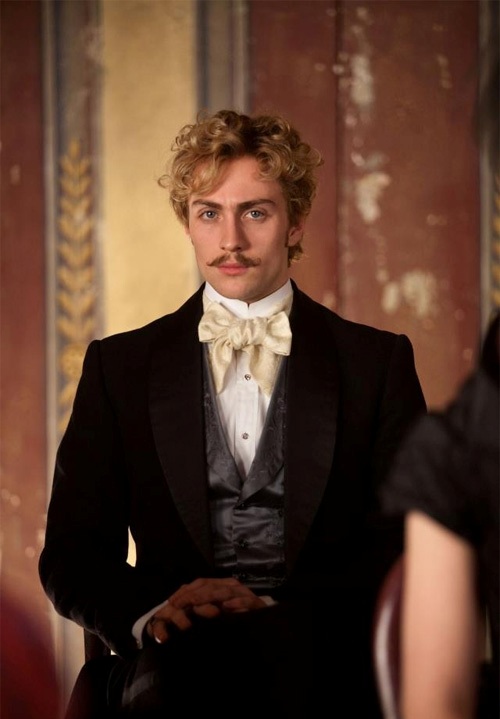
     And it should be remembered button-through shirts didn’t exist prior to the 18th and throughout the Georgian period as a whole - inclusive the Regency period. But true enough, during the late Victorian era button-through shirts gradually came to fruition. So do not have your hero or heroine unbuttoning his shirt, unless you are writing a late-Victorian/Edwardian era novel. And remember smock shirts were still customary wear for the average Joe, as were nightshirts. It may also surprise readers and authors to learn ready-made attachments, such as frilled cuffs and a jabot - the former affixed with looped-through ties and the latter with back-buttons.


    Button-Through Victorian Dress shirt!

    Don't you just love that moustache... Tickle me, do...

    Thursday, 19 April 2018

    Who was John Cromwell? - English Civil Wars

    Who was John Cromwell?


    An interesting snippit taken from official military archives and embellished with a little background history in reference to English regiments serving in the Low Countries: 


    ********
    The Civil War was still ongoing in England and the regiments were, on the face of it, pro-Royalist. In Jan 1649 when Parliament took control of the country and executed the king the general feeling in the Netherlands was one of shock and horror especially as William, Prince of Orange was the king's son-in-law. When the ruling Commonwealth in England sent Chief Justice St John to the Hague to forge a confederacy between the two republics he was abused by the public and failed to achieve his objective. There followed a war between the English and Dutch, placing the English regiments in a difficult position. But they were regarded as being supporters of the Royal family and therefore not loyal to Oliver Cromwell. 
    *******
    The Colonel of one of the regiments was *John Cromwell* - related to Oliver but a staunch royalist, so much so that he changed his name to Williams. Fortunately for the officers and men the war was carried on at sea and not involving land forces.
    And a mistake that was, because several of the officers were in Cromwell's pay throughout and were dutifully spying on the Royals. But interestingly two of the most notorious re royal scandal and accusations of shared mistresses, were embraced by Charles shortly after the restoration despite both were related to Lucy Walter - one a true gentleman albeit a spy, and the other a blackguard double-agent of the worst kind. But who was John Cromwell?


    In Dedication to the "Buffs" amongst many!

    The Companies in Dutch Service 1664

    After 80 years of cooperation between the English and the United Provinces in the fight against the Hapsburgs the two countries now found themselves on opposite sides. 'It was alleged that the Dutch had been guilty of encroachments and depredations on English commerce and on the English settlements across the seas.' In 1664 the English and Scots companies in the service of the States were mostly in the pay of the state of Holland with some maintained by Friesland, Utrecht and Zealand. Altogether there were 32 English companies and 21 Scottish. In December 1664 the records show that these 53 companies were distributed in 31 different towns with no more than two companies stationed together, except at Maastricht where there were six. However, on paper the companies were allotted to 4 English regiments and 3 Scots.

    The Four English Regiments serving in the Low Countries 1665

    From various documents the regimental history was able to compile a list of English officers who served in the Dutch service in 1665 and they are listed under four regiments named after their Colonels:

    Lord William Craven's Regiment - ( Lt-Col Sir Walter Vane )
    Colonel Thomas Dolman's Regiment - (Lt-Col John Cromwell aka Williams) *this is where the name change shows up in official records and states he had previously changed his name.*
    Colonel William Killegrew's Regiment - (Lt-Col Humphrey Peyton)
    Colonel Robert Sidney's/Sydney's Regiment - (Lt-Col Sir William Sayers)

    The Oath of Allegiance

    Letters from Sir George Downing, the envoy at the Hague, to Sir Henry Bennet in England give details of the choice facing the English soldiers. The Dutch did not want potentially hostile troops in their country while there was a state of war between England and Holland so the choice was to swear an oath of allegiance to Holland or be disbanded. The oath was to include a renunciation of allegiance to the English King. Many of the soldiers had been born in the Low Countries and had strong ties with the country, and others, especially the Scots had no love for the English King, Charles II. For some reason, Charles did not exercise his prerogative to recall the English troops although urged to do so.

    The Disbandment of the Regiments 1665

    The Dutch authorities decided to honourably discharge the English and Scots troops serving in the regiments and replace them with Netherlanders. Those Englishmen and Scotsmen who were prepared to swear the oath of allegiance to The Dutch republic would be re-admitted into the regiments. The discharged officers and men were given no assistance from the English government for their repatriation, so the English envoy Sir George Downing paid for their passage to England and gave them letters of recommendation.

    The 3 Scots regiments were converted into 3 nominally Dutch regiments and the 4 English regiments were replaced by only one Dutch regiment. Those English officers who remained in Holland were placed in the 3 former Scots regiments. 'The States General, on 14th April, ordered that the transformed English and Scottish companies, being now Netherlands companies, the drums were to beat the Holland March on guard mounting, and on all other occasions, and that the sashes and badges of the officers were to be orange-coloured, similar to those worn by the Dutch officers.'

    The King's Change of Heart

    In early 1665 the discharged officers and men began to arrive back in England and the King reconsidered the question of taking them back into his service. A list was compiled, dated 11th April 1665, of 17 subalterns who had arrived or who were expected. On 20th April a warrant was issued taking them into his pay at a reduced rate, 3 shillings a day for lieutenants and 2 shillings and sixpence for ensigns. Captains were given 5 shillings a day.

    The Appointment of Col Robert Sidney/Sydney, 31st May 1665

    The King finally decided to form the officers and men into a regiment and issued a commission to Colonel Robert Sidney to be 'Colonell of Our Holland Regiment of Foot, raised or to be raised, for Our service.' Robert Sidney, who had commanded one of the English regiments in the Dutch service, was the 3rd son of Robert 2nd Earl of Leicester. He was born in 1626 and died suddenly in 1668, buried in Penshurst. He was a handsome man and many thought due to scurrilous rumours put about by John Evelyn, Killigrew, James Duke of York and Col Thomas Howard, he was the real father of the Duke of Monmouth. (The reasons for this assumption were that Robert's mistress was at one time the King's mistresses/wife (?), Lucy Waters (Mrs Barlow), also that the resemblance was so strong that many remarked on it, forgetting Lucy and Robert were cousins - also seems unlikely Charles II would have asked Robert Sydney to raise a new Hollander regiment if he thought the Duke of Monmouth was from Robert's loins.

    The Holland Regiment, 23rd June 1665

    The official date of the raising of the Holland Regiment for His Majesty's service was the 31st May 1665 the day of the Colonel Robert Sydney's commission but the other officers received their commissions 3 weeks later on 23rd June. These 21 officers included Major Alexander Bruce who was the only officer of the Scots regiments to refuse the oath of allegiance to the Netherlands. The establishment was fixed at 6 companies of 106 NCOs and men each. The field officers acted as captains to the first 3 companies so that, as an example of the organisation:

    The 1st Company had Colonel Robert Sidney/Sydney as captain, a lieutenant, an ensign, 2 sergeants, 3 corporals, one drummer and 100 private soldiers.

    The 2nd Company had Lt-Col Thomas Howard - *Spy extraordinaire (double agent) during the ECWs, and Master of the Horse to Princess Mary, wife/widow Prince William of Nassau/Orange*.   
    The 3rd Company by Major Alexander Bruce, 
    The 4th Company by Capt Sir Thomas Ogle
    The 5th Company by Capt Henry Pomeroy
    The 6th Company by Capt Baptist Alcock

    All the officers in the regiment had served in the English-Dutch regiments except the surgeon. It should be noted that when the officers and men refused to take the oath in Holland they faced a very uncertain future so their loyalty to the English crown had been proved. Another regiment, the Duke of York and Albany's Maritime Regiment of Foot (The Lord High Admiral's Regiment), had been raised the previous autumn. This, and the Holland Regiment, were primarily intended for service at sea. On the 11th July the cost of these two regiments was ordered to be charged to the Navy. The Holland Regiment remained on the naval establishment until May 1667.

    Wednesday, 18 April 2018

    Georgian/Regency Gentleman Cant - or not?

    Oliver Twist - Victorian novel by Charles Dickens.


    Rum as prefix to slang words has nothing to do with the drink. The Oxford English Dictionary describes rum prefix as a canting term from the criminal underworld. To start with it was positive, meaning variously good, fine, excellent or great. Subsequently "rum booze" was fine or excellent drink, a rum duke was a handsome man and a rum dab was a dextrous thief (dabs are fingers), rum bugher was a valuable nifty working hound, often as criminal as their masters (poachers/thieves), but it was cant from within the criminal world where a duke was not a toff/aristocrat, he was a master mind of criminal activity, and this is where modern-day writers have researched the wrong elements of the rum prefix re periods in history. 


    Do you remember Oliver Reed as Dodger in Oliver Twist  and his "rum bugher" Bullseye (Dickens).  


    Around 1800 the word "rum" prior to a word (prefix) appeared to do a flip from positive to negative and started to mean something that was odd, strange or peculiar. A rum book was a curious or strange one, a rum customer was a peculiar man or one risky to offend, a rum phiz was an odd face and so on. 

    The OED guesses (it would be fair to say) the change came about when old criminal cant slid into common usage, through slang expressions such as rum cove, originally "an excellent or first-class rogue". 


    Other terms also shifted their senses over time - subsequently the English Dialect/Cant Dictionary noted rum duke was “a strange, unaccountable person”, a substantial shift in sense from the original, because it no longer referred to the criminal duke, or criminal activities. But the original cant continued within the criminal underworld. 

    Dozens of slang terms were cleaned up, became commonplace  
    rum do - definition: a strange situation or event
    rum deal -def - raw deal
    rum bugger - true def - sodomise/er - cant - derogatory term for slippery/untrustworthy character.
    rum bum - def - runny/grassy poo


    So if you're writing Georgian period/Regency cant, rum prefix tended negative/derogatory at a time when the Bow Street Runners came into being. How much the BSR influenced the switch in cant bears scrutiny. Which brings us to cant, which tended to be in use within the working realms of society and rarely used within the drawing rooms and salons of the social elite, where a word of that nature would not only raise eyebrows it would give rise to mistrusting the speaker!


    And of course Francis Grose's Dictionary of the Vulgar Tongue takes you into the backstreet dives and dens of the criminal world cant, not to mention bawdy houses and doxy madams. The BBC looks at Francis' life and how he acquired the listings for his dictionary.    

    Saturday, 14 April 2018

    True life Vs Romantic Fiction


    What fan of the Georgian era fails to recognise this portrait of Georgiana Duchess of Devonshire?
    And almost all fans of the Georgian period and relatively short era of the Regency (1811-1820)  recognise Chatsworth House depicted as Mr. Darcy's rural estate in Derbyshire, the house the turning point in Elizabeth Bennet's estimation of Darcy as a man of landed substance, and eminently worthwhile catch for any woman. After all, what was a little brusque (rudeness) if but a standard of his financial flag and sense of superiority over such as she? But a lady with wile could turn, could she not, and embrace a man of substance and forgive him his former sins!  


    Life for Georgiana was far from the romantic tale in which Darcy and Elizabeth resolved their differences and presumably lived a relatively happy existence at Pemberley. Whereas, Georgiana's story is extremely sad, and a secondary lesser known portrait inspired the writing of The Reluctant Duchess. 


    There is sense of inner sadness to this portrait of Georgiana, and that sadness was revealed within her letters, which differing biographers have interpreted in differing ways. Some paint Georgiana as the victim of an arranged marriage, an unhappy marriage, in which her husband's mistress reigned alongside the duke at Georgiana's expense (akin to Diana, Princess of Wales). Whilst other biographers view her as a manipulative socialite who lived within a harmonious menage et trois, her friend Elizabeth (Bess) far from a backstabbing mistress to the husband (Duke) and indeed her best friend. As a writer one can read others assumptions, opinions, and then look to the eyes of the person in question, and portraits are a great medium to the person behind a smile, whether that be a faint smile or mere quirk of the lip, for the eyes most definitely reveal much about the inner person. I am not attempting to imply Georgiana was either of the above, but will add that her life involved humiliation of a loveless marriage that was anything but heaven, she nonetheless experienced joy (birth of children), she experienced love with another man, suffered tremendous heartache in having to give away a child, she became a fashion icon, and politically minded socialite. In effect she sought escape from tragedy and deep heartache and put her all in to becoming Georgiana, fiercely independent in spirit albeit tied to a marriage she was as good as forced into.  Her mother was overbearing, manipulative, and seeking to better her daughter's and her family standing within the upper echelons of the aristocracy, and she achieved her aim!          

    Unfortunately young women in the past were subject to parental whim, many self-seeking parents with no desire but to better their fortunes with family alliances by way of marriage. Often substantial dowries purchased titles for daughters, or daughters were as good as sold to satisfy the whim of a suitor who required little more than a virgin bride to provide the heir and a spare to a vast fortune and landed estate. I shall leave you the reader to make of latter as you will, and I shall move on to The Reluctant Duchess. 

    Indeed The Reluctant Duchess mirrors a little of the humiliation Georgiana was subjected to, but Liliana has a happier outcome from her experience of a duke and mistress cavorting and holding court at Summer and Winter balls. I set TRD within the Regency era, the setting is the West Country, Devon to be precise. It therefore has a dark Gothic edge to it, with added adventure and murder and mystery as described below in the premise.


    The Reluctant Duchess (Steamy Content) - a Regency Gothic tale of romance, abduction, mystery and murder.

    Devon Howard, the Duke of Malchester, acquires a bride by dubious means. Well aware Liliana is a reluctant duchess, and although his new wife submits to his ardent advances on the wedding night, he cannot be sure, that even if given time, she will ever surrender her heart to him. While his past continues to damn him, he sets out to win Liliana by inciting jealousy and rivalry ‘twixt her and Serenity: a would-be mistress?

    Friday, 2 March 2018

    Prinny's Dreams (Prince Regent)


    It was 1786 when the Prince of Wales (later Regent) gained the lease on Thomas Read Kemp's farmhouse on the site of the present Royal Pavilion. 

    By 1802, while in partnership with John Nash, Humphry Repton (1752-1818) was hired to oversee the landscaping work in the Pavilion grounds. In those earlier days the Prince acquired/purchased the land which formed the Royal Pavilion estate. Thus Repton was invited to advise on the site in November 1805. Whilst his designs for a garden surrounding the Pavillion at Brighton had illustrated proposals both (Indian-style pavilion), neither was executed. But by 1808 the Royal Stables and the Riding School (present day Dome and Corn Exchange) were completed. 

    John Nash went on to build the Royal Pavilion in its present form between 1815 and 1822, the gardens too, though the original gardens were redesigned in the 1900s.


    Ostentatious is probably the best word to  define the architecture of Brighton Pavilion - a combination of towering domes, minarets, and two eminent roof structures depicting tented pavilions. the latter oft seen within mediaeval English etchings in reference to battles and jousting tournaments. Thus the Pavilion has a decidedly Middle and Far Eastern influence, namely Turkish, Persian (Iran), so not altogether Indian as such in design, but Islamic.      


    Map of  Bright Helmstone - latterly known as Brighton. 


    In the blue ring box is the location of The Pavilion Mews (Stable Block) - not only commodious and able to house 60 horses, it was a glamorous building in its own right. 

    In the red ringed oval is the Pavilion itself.


    The Pavilion Mews and Riding School in its original state. 

    Again we can see a Moorish influence, but it's interesting to note, ladies fashions at this time were also influenced by an idealistic Eastern romanticism. Thus ladies wore turbans decorated with jewels and feathers, and even wore Banyans as over garments for day wear, whilst gentlemen wore Banyans as bedchamber robes, though nothing new in that for Banyans were popular long before.  


    As with all Prinny's grand dreams he set out to refurbish and extend what we now recognise as 
    Buckingham Palace


    One can see the architectural changes in comparison to the original Buck House - below. 


    Buckingham House 1773 - the home of the Duke of Buckingham, a notorious rake amidst many within the court of Charles II. 

    The saddest aspect of Prinny's dreams was the fact he never lived in the newly refurbished Buck House, nor did he enjoy the fruits of the extension of the original house that became  his personal Brighton Pavilion. When George became king in 1820, increased responsibilities and ill-health beset him. 

    Albeit the interior of the Royal Pavilion was finally finished in 1823 he made only two further visits (in 1824 and 1827).

    The noise and building construction had driven him distant to others houses, namely that of courtiers and friends, and houses of his mistresses. All the while he despaired and fretted over the length of time the two builds were under construction, and as months ticked into years he fell to morose countenance. 

    Contrary to many beliefs, Prinny hosted far more parties in his original Brighton Farmhouse - more than he ever did within the Pavilion. 

    Barely a few months, all told, did he enjoy parading about within the completed pavilion, for he was becoming so grossly obese and unwell, he as good as retired into obscurity until his demise, and would only receive ministers of state, his mistress, and close friends.   

    26 June 1830, Prinny died at Windsor Castle, Windsor. 

    His favourite tipple was Cherry Brandy. 

    Sadly he despised his wife, Caroline of Brunswick, and as good as banished himself from Carlton House. 

    His living issue was that of Princess Charlotte. 

    Note the design of the Taj Mahal - the jewel of Muslim Architecture in India.